By: Albert Lang
Holy Banana Republic! Third base is a deliciously deep fantasy position. If Garrett Atkins doesn’t get traded, and Chipper stays healthy (a slightly bigger if), you can pretty much rely on the top eight third basemen next year.
The debate surrounding third baseman is similar to that surrounding shortstops: who goes first and does he warrant being the first overall selection? For me, the answer to both those questions is David Wright. I have him two spots higher than Hanley Ramirez (my number one shortstop) and four spots higher than Alex Rodriguez.
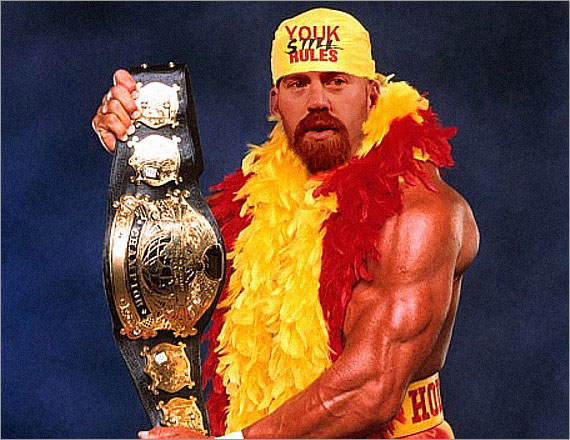
Here is why. Not really, but it is fun to mess with A-Rod electronically. With A-Rod, you know what you get: 100+ runs, 35+ hrs, 100+ RBIs and a .300 average. Something else to keep in mind with A-Rod: there is an odd trend surrounding his homeruns, oddly enough, in odd years. In 2003, he hit 47 HRs; in 2005 the number was 48; and in 2007 he went deep 54 times. Contrast that to his production in even years: in 2004 he hit 36 and in 2006 & 2008, 35. If this trend continues, he is in line to hit more than 45 dingers in 2009. I’m guessing this is just a funky anomaly…but what if it’s not? In addition to A-Rod’s impressive power numbers, he also knows how to run. He hasn’t stolen less than 15 bases since 2002 (and has failed to reach this number only once in a full year during his career). So, A-Rod is amazing. I know it, you know it, Madonna knows it. His contemporary from Queens, however, is much more amazinger (go with me, I’m on a roll).
David Wright is similar to A-Rod in most offensive categories. Wright should get you 100+ runs, 30+ HRs and a batting average around .310. You can also count on his legs for 15+ stolen bases. Wright separates himself from A-Rod in two respects: age and doubles. Wright has averaged more than 41 doubles every full season in the majors. A-Rod, comparatively, has averaged just over 29. The doubles signal that Wright has room to grow in the power numbers, which will only help his counting stats. Quite simply, David Wright should improve while A-Rod has likely plateaued (though a hall of fame worthy plateau). In addition, Wright’s age makes him a less, albeit somewhat negligible, risk of injury and decline. Here, we are talking about four spots at the top of the draft; I think you can take David Wright first and not look back. He will be impressive, he will be healthy and his numbers should improve. You can’t say the exact same things about A-Rod.
Now I feel dirty talking about New York so much. On to the guys the Big Apple spotlight doesn’t shine so brightly on…yet.
After Kevin Youkilis, who is nasty, there is an interesting debate between the six – eight ranked players (Evan Longoria, Chipper Jones and Garrett Atkins). Evan Longoria is my sixth third baseman because of his numbers last year (.272 with 25 home runs in 122 games). If he stays healthy and continues to play to his potential a 30 home run campaign is not out of the question. The only slight concern with Longoria is the potential for a sophomore slump, but I’m still taking him in the 5th round and not looking back.
Meanwhile people tend to dismiss Chipper Jones. In his last five seasons, he has averaged about 123 games played, though he has eclipsed that number in each of the last two seasons. Aside from a bizarre 2004 campaign and his rookie season in 1995, Chipper hasn’t hit lower than .295 in his career. And, by the way, he should hit over 20 home runs, probably in the 25-28 window, drive in runs and score. Sure he might miss some games, but that is where his value comes into play. If you can get him in the 7th round and pair him with a sleeper back-up, you’ll have a first round quality third basemen in their cumulative statistics.
Garrett Atkins getting traded scares the DeJesus out of me. While suiting up for the Rocks full time, he hasn’t hit less than .286. Like Chipper you can count on 20+ homeruns (although it might take Atkins more games to do that in), he’ll score 80+ and drive in 100+.
Still, if I don’t get one of the top guys, I’m going with Longoria and banking on his upside. I’d rather use a fifth rounder on him, than grab someone like Carlos Delgado or Pena and wait to grab a Garrett Atkins. Chipper makes an interesting play, but you have to make sure you have a comparable back-up that can pick up the batting average slack. Because, lets be serious, who thinks Chipper is going to hit .364 again?
This is what I wrote about Troy Glaus before this happened: If none of the afore mentioned intrigue you, might I interest you in a third basemen who hasn’t hit less than 20 home runs in the last four years? Would you be surprised to learn this third baseman hit .270 with 27 HRs and 99 RBIs last year? And that you can get him fairly late in your draft? Ladies and gentleman (ok, just gentleman), I give you Troy Glaus. If you pick runs/stolen bases early in the draft (maybe Jose Reyes, Jimmy Rollins or Grady Sizemore), you could do worse than grabbing Glaus later on. When completely healthy, he has a real chance of hitting 35+ homeruns. Even when slightly healthy he should still get you 25+. He is only 32 and should be an 10th round draft pick – definite value and reliability you can pair with a riskier starting third basemen option. It’s cute right? Well back to reality.
Glaus immediately becomes a late round draft pick – someone you might be happy to store away on the DL in hopes that he comes back and can provide some pop in your lineup later in the year. Obviously this depends on your ability to stash people in DL slots. It almost makes sense to avoid him on draft day because it is more than likely he will eventually find his way to the waiver wire. Still, if you can stash him on the DL until May or so, he has value– it doesn’t hurt to have 15 home runs coming out of nowhere.
A young, potential Glaus clone is Chris Davis. Davis played in only 80 games last year, yet he hit 17 home runs and drove in 55 RBIs. He also batted .285 and scored 51 runs. The only concern is the kind of playing time he will get. If he starts, he could hit 30 homeruns and would find it almost impossible to score less than 80 runs and knock in around 100. Hitting in the Rangers lineup, in the launching pad of Arlington, means Chris Davis could become the preeminent sleeper third baseman. If you miss out on the top eight (or grab one of the riskier eight), make sure you have an idea where Davis might go, and then be sure you pick him a round ahead of that. He has a phenomenal chance to close the production gap.
Complete Third Basemen Ranks (* denotes projected starter):
David Wright*
Alex Rodriguez* (oh so pretty)
Miguel Cabrera* (positional flexibility)
Aramis Ramirez*
Kevin Youkilis*
Evan Longoria* (sophomore slump?)
Chipper Jones* (injury always a worry)
Garrett Atkins* (trade a concern)
Adrian Beltre* (Batting average should increase, which should help counting stats)
Jorge Cantu* (the numbers don’t lie…do they?)
Mark Reynolds* (so many strike outs)
Mark DeRosa* (positional flexibility, switch to AL)
Aubrey Huff* (great numbers last year)
Melvin Mora* (was RBI total a little fluky?)
Chone Figgins* (steals big source of value, better as a second bagger)
Chris Davis* (I like him)
Casey Blake* (good beard growing capabilities)
Kevin Kouzmanoff*
Edwin Encarnacion*
Alex Gordon* (at some point he might live up to the hype)
Mike Lowell* (age a concern)
Ryan Zimmerman* (bounced back to hit well last year…poor line-up, poor team)
Troy Glaus (injury zaps big bops)
Akinori Iwamura*
Ty Wigginton
Marco Scutaro
Mark Teehan
Freddy Sanchez* (never a huge fan of players that only get you batting average)
Felipe Lopez
Scott Rolen
Jeff Baker
Joe Crede
Pedro Feliz (he likes to hit homeruns…he likes to strike out)
Blake DeWitt
Ian Stewart
Rich Aurilia
Macier Izturis
Hank Blalock
Nick Punto
Aaron Miles
Ramon Vazquez
Greg Dobbs
Jeff Keppinger
Chase Headley (maybe low, but that line-up and ballpark don’t play nice for sophomore campaigns)
Omar Infante
Showing posts with label fantasy baseball. Show all posts
Showing posts with label fantasy baseball. Show all posts
Thursday, January 22, 2009


Wednesday, January 7, 2009
H2H Shortstop Rankings
h2h Corner
Shortstop Rankings
I love Cal Ripken (platonically, of course, unless he said something…). He was a steady, predictable, trusted shortstop (and later third baseman). Though his numbers might never have been completely dominating (with the exception of his MVP year of 1991), his fantasy owners were always happy to have him.
Over were the days of great defense being king – or even valued (witness how difficult it is to ascertain Adam Everett’s true value). This new age has ushered in a new bread of fantasy superstars: the well-diversified offensive shortstop (be it via the stolen base, high batting average, runs scores, or, yes, homes runs/RBIs). Having this type of SS on your squad has become essential to the success of a fantasy squad.
The top three fantasy shortstops are pretty easy to predict (barring significant injury): Hanley Ramirez (#3 overall), Jose Reyes (4) and Jimmy Rollins (16). Given their numbers, you can make a case for taking either Hanley Ramirez or Jose Reyes with the top pick overall. Personally, I like Hanley Ramirez a bit more (and this really is splitting hairs) because his HR production has steadily improved from 17 to 29 to 33, while his batting average has stayed consistently around .300. My only concern is if his stolen base production continues to decline. In his first two full seasons, Ramirez swiped 51 bags, while last year he stole only 35. So long as he maintains that production, he will be the best fantasy shortstop for a long time (provided the Marlins hold off moving him to CF).
Jose Reyes doesn’t provide the pop that Hanley does, but he more than makes up for it with his legs and knowing how to use them. He has averaged 113 runs in each full season with at least 56 stolen bases each year. His batting average is a bit more suspect than Hanley’s, though it has hovered between .280 - .300 for the last three seasons. I don’t really like the Mets, but I love Jose Reyes. If they have any interest in Cesar Izturis, I’m sure the Orioles would be happy to make a deal (provided Izturis isn’t an Angelos favorite yet).
Outside the big 3, if you’re looking for a dependable player with decent upside, might I suggest Jhonny Peralta (66)? For someone I thought would have a comparable 2008 season to Khalil Greene, he put up very un-Greene-like numbers. Aside from 2006 (.257 and 13 HRs), Peralta hasn’t hit lower than .270 or less than 21 HRs in a full season. He should also get you 70+ RBIs (potentially more depending on where he hits in what could be a productive lineup) and 85+ runs (his career low is 82). Over the last four years, Peralta has quietly become a fairly consistent SS (and he could add 3b eligibility and flexibility to your line-up this year). While he might not possess the upside of a Rafael Furcal (75), he is nonetheless a good – and likely under the radar – option.
Speaking of upside, if you’re looking for a later-round shortstop with the potential for solid returns, think long and hard about Rafael Furcal (75) and Stephen Drew (93), particularly if they fall where they should (the seventh and ninth rounds, respectively). Both could experience better seasons this year than last. Furcal has the well-earned health specter hanging over his head: he has failed to play 140 games in four of his nine complete seasons. However, when he plays, he puts up delicious numbers. A healthy Furcal is good for 100-130 runs, 10-15 HRs, and 25+ SBs. He hasn’t posted an average worse than .275 and should be right around.280.
As for Stephen Drew, he posted a remarkable sophomore campaign. His batting average jumped from .238 to .291 (his 2008 numbers were actually more in line with his 209 at bats in 2006). He also scored 91 runs and hit 21 HRs. If he continues improving his batting average and adds a little pop – he might hit 27-30 HRs and be a good source of RBIs – he would be an excellent mid-round selection.
I wonder if I am a little low on Troy Tulowitzki (108). Because of the upside he presents, he could be a lot like Stephen Drew. I am ultimately dissuaded, however, because I like the consistency (and stolen bases) from Orlando Cabrera (102) (ya know, if someone wants to give up the picks and sign him already) and J.J. Hardy (96) a bit more. It wouldn’t be a reach, though, to consider Tulo over the three players ranked in front of him.
Last year’s top 13:
- Jose Reyes (last year’s overall ranking: 2) Finished: 2nd among shortstops
- Hanley Ramirez (3) Finished: 1st among shortstops
- Jimmy Rollins (4) Finished: 4th among shortstops
- Orlando Cabrera (42) Finished: 9th among shortstops
- Carlos Guillen (44) Finished: 15th among shortstops
- Troy Tulowitzki (58) Finished: 33rd among shortstops
- Derek Jeter (65) Finished 7th among shortstops
- J.J. Hardy (73) Finished: 8th among shortstops
- Edgar Renteria (79) Finished: 18th among shortstops
- Khalil Greene (82) Finished: 56th among shortstops
- Jhonny Peralta (85) Finished: 3rd among shortstops
- Michael Young (88) Finished: 5th among shortstops
- Miguel Tejada (91) Finished: 11th among shortstops
In retrospect, I was way too low on Michael Young and way too high on Orlando Cabrera and Carlos Guillen. Looks like I pegged Derek Jeter and J.J. Hardy right on though. Tulowitzki, I’m taking a mulligan (on account of his injury). Still, I never advocated taking him in the fourth round, which is where a lot of people drafted him.
If Jhonny Peralta continues his upward trajectory, failing to land one of the big three would necessitate getting Jhonny in the 6th/7th round. This could be a draft-changing/saving move. He could be undervalued in drafts and might provide a good SS at the right price if you are frozen out of the alpha dogs.
If you have a top pick, you could do worse than taking Pujols or Grady Sizemore. When the draft comes back around, however, make sure you can get Jimmy Rollins. It is hard to nitpick Jimmy’s value next year – he had injury problems and still made it back to a top 5 year. He is easily a second rounder in my book, but hopefully, you can get him toward the end of the round. This, surprisingly, makes Jimmy Rollins (with a tip of the hat to Jhonny Peralta) perhaps the best SS bargain.
Complete Shortstop Ranks (* denotes projected starter):
- Hanley Ramirez*
- Jose Reyes*
- Jimmy Rollins*
- Jhonny Peralta*
- Michael Young*
- Rafael Furcal* (health is a question here)
- Derek Jeter*
- Stephen Drew* (Could improve in the desert)
- J.J. Hardy*
- Orlando Cabrera (where will he end up?)
- Troy Tulowitzki* (Wasn’t a big fan last year, but I didn’t predict injury-plagued campaign)
- Miguel Tejada*
- Christian Guzman
- Ryan Theriot
- Mike Aviles
- Marco Scutaro
- Carlos Guillen*
- Yunel Escobar* (lots of swirling trade rumors)
- Edgar Renteria* (yuck…
- Jed Lowrie
- Bobby Crosby
- Yuniesky Betancourt*
- Clint Barmes
- Jose Bautista
- Jason Bartlett (
- Brendan Harris
- Cesar Izturis* (Way to go Orioles)
- Jamey Carroll
- Erick Aybar
- Rich Aurilla
- Macier Izturis
- Nick Punto (Metrodomers love him)
Friday, November 14, 2008
First Basemen Rankings
h2h Corner
I recently took a business trip to the west coast – I learned that it is far. Thankfully my roommate (he is a DJ and also really good at Survivor Fantasy) lent me his iPod. Since he is a DJ, he has loads of pop music. While I still love listening to the whimsical Don’t Think Twice It’s Alright, I cant deny the joy I get from Burnin’ Up or Hot N Cold (man Katy Perry’s songwriter = the amazing). I can’t remember a time when pop music was so consistent and fraught with as many heavy hitters, which, now makes the rambling preamble pertinent.
In my opinion, there is a core of nine reliable first basemen. This means you can wait on the position in drafts and try to acquire elite players at more elusive positions and stat categories early. There is no shame, however, in securing HR/RBI production – week in, week out – by grabbing an Albert Pujols or Ryan Howard in the first round.
That said, I am not sold on Carlos Delgado, Derrek Lee (mostly because of how he spells his first name), David Ortiz and Carlos Pena. Quite simply, where did Delgado’s first half self go? In April, May and June, Delgado hit .198, .258 and .229 with 3, 5 and 6 home runs respectively. Regardless, that horrendous start is in there somewhere, and it could come back like that sketchy rash you got vacationing in
Lee doesn’t provide the power or RBIs slotting into the middle of a potent line-up that an owner would like to see. He seems far removed from his MVP-esque numbers in 2005, when he hit .335 with 46 HRs, 107 RBIs and 15 SBs. Last year (a comeback year of sorts), he hit .291 with 20 HRs, 119 RBIs and 8 SBs. In his last three seasons he has hit a combined 50 HRs; reaching his 2005 levels now seems unattainable.
Meanwhile there are a lot of question marks around Big Papi. What does the loss of Manny, if anything, mean? Will
I bought heavily into Carlos Pena last year. It didn’t pay the dividends I would have liked, especially when Adrian Gonzalez was still on the board 2-3 rounds later. That said, Pena provides a good chance at 35+ HRs and 100+ RBIs. I guess what I’m saying is, if he is the 13th first basemen off the board, you have a good upside play on your hands.
I also really like Joey Votto – he could provide some great stats in that ballpark. In what was essentially a full season, he hit .297 with 24 HRs, 84 RBIs and 7 SBs. Lots of upside there.
Last year’s top 15*:
- Prince Fielder (last year’s overall ranking: 14) Finished: 11th among first basemen
- David Ortiz (19) Finished: 22nd among First Baseman
- Ryan Howard (23) Finished: 4th among First Baseman
- Carlos Pena (25) Finished: 20th among First Baseman
- Albert Pujols (27) Finished: 1st among First Baseman
- Lance Berkman (28) Finished 2nd among First Baseman
- Justin Morneau (41) Finished: 9th among First Baseman
- Adrian Gonzalez (50) Finished: 8th among First Baseman
- Derrek Lee (66) Finished: 14th among First Baseman
- Mark Teixeira (69) Finished: 3rd among First Baseman
- Carlos Delgado (76) Finished: 10th among First Baseman
- Kevin Youkilis (77) Finished: 6th among First Baseman
- Paul Konerko (83) Finished: 37th among First Baseman
- Adam LaRoche (89) Finished: 25th among First Baseman
- Todd Helton (98) Finished: 52nd among First Baseman
*Miguel Cabrera wasn’t ranked because he didn’t have first basemen eligibility yet.
Man…Todd Helton was the first draft pick in fantasy I ever made – it’s sad to see him fall to these depths. What can you do though? I wasn’t too interested in him last year and want no part of him this year.
I was a little too bullish on Carlos Pena it appears, and the David Ortiz injury really hurt that prediction. I thought Prince Fielder was the second coming of Ryan Howard…I was wrong. I do expect the same kind of season next year, maybe a tick better.
It pays to go with consistency at first base, which is why Ryan Howard, Albert Pujols, Lance Berkman, Mark Teixeira and Adrian Gonzalez make up my top five fantasy first baseman next year.
Complete First Baseman Ranks:
- Albert Pujols
- Ryan Howard
- Lance Berkman (probably will not repeat his stolen base performance)
- Mark Teixeira (regardless of where he lands)
- Adrian Gonzalez
- Miguel Cabrera
- Justin Morneau
- Prince Fielder
- Kevin Youkilis
- Carlos Delgado (kind of scary putting him here, cant argue with 2/3 of his season though)
- Derrek Lee
- David Ortiz (no Manny, no problem? Hurt wrist = problem)
- Carlos Pena (legit 30+ HR possibility)
- Jason Giambi (where will he end up?)
- Joey Votto
- Jorge Cantu (could regress)
- Mark Reynolds (prefer him as your 3b – one of these years he will put together a good *lucky* batting average campaign)
- Mark Derosa
- Aubrey Huff
- Mike Jacobs
- Conor Jackson (man, did he fade)
- Adam LaRoche
- Chris Davis
- Nick Swisher
- James Loney (not so high on him…never was)
- Ryan Garko (see catcher rankings)
- Kevin Millar (consistently below average)
- Alex Gordon (so woefully inconsistent)
- Eric Hinske
- Casey Kotchman
- Victor Martinez (you want him for his other eligibility)
- Ty Wiggington
- Paul Konerko (could he be D.O.N.E.?)
- Billy Butler (let’s just say, I don’t believe in the Royals)
- Matt Stairs (platoon in Philly, if Burrell gone?)
- Daric Barton
- Rich Aurillia
- Greg Dobbs (ditto the Stairs talk)
- Ross Gload
- Darin Erstad (he wasn’t entirely unusable last year…but yeah, he was close)
- Martin Prado (interesting numbers down the stretch: .335 BA, 25 runs, 2 HRs, 25 RBIs in the second half, massive positional flexibility, cool name)
Monday, October 6, 2008
NL Fantasy Baseball MVP
Shortly after the playoffs end pundits Will review their choice for the National League MVP award. For us fantasy baseball folk, our analysis is a different. For example, in roto leagues, we value players who are dominant in specific categories. We favor the Corey Hart's of the league over the .250 30 homerun hitter. In real life, Carlos Delgado is likely to receive strong consideration from the beat writers for his ability to bring the Mets back from dead in the middle of the summer. And, indeed, Delgado was a valuable player in fantasy baseball as well, but he should not be fawned over as much since he is only a two-category player.
How do we go about choosing the most valuable fantasy player? There are many methodologies to consider. They include: VORP - Value over Replacement Player, position scarcity analysis, all around best statistics in the five hitting categories, or best value compared to draft position. Reasonable people may disagree on the choice, and that is part of the fun. For our purposes, we are not conducting a scientific analysis. Rather, we are going with the unscientific analysis of asking ourselves, "who would you have drafted first overall if you had the benefit of hindsight?" We do not consider value compared to draft position because we will consider players under that analysis in a separate article (Ryan Ludwick, Matt Kemp, Jorge Cantu, etc.). Here are the contenders:
Albert Pujols (.357-37-116-7-100)
Ryan Howard (.251-48-146-1-105)
Hanley Ramirez (.301-33-67-35-125)
Matt Holliday (.321-25-88-28-107)
David Wright (.302-33-124-15-114)
Lance Berkman (.312-29-106-18-114)
We believe these players were a cut above the rest in the National League this year. As a comparison, 30 players in the NL hit 25 or more homers, 14 had 100 rbi's or more, 11 had 25 steals or more, and 14 had a .300 batting average or higher.
And the winner is . . .
Albert Pujols. His .351 batting average is so far ahead of the average player that it really sets him apart. But his 37 homers and 116 rbi's are nothing to scoff at either. Pujols finished second in the NL in average, 4th in hr, 4th in rbi's, and 14th in runs. Although he only stole seven bases, his other stats are so dominant that he is most deserving of the NL fantasy baseball MVP award. It should also be noted that his preseason draft position fell due to fears that he would have surgery on his elbow. Compare him to his competitors.
Our runner up is Hanley Ramirez. Ramirez gets extra points for being an offensive force at shortstop, a position known for its scarcity of talent. His stolen bases and runs are clearly superior to most of the other players on the list, and his batting average and homers, especially when compared to other shortstops, are particularlyu impressive. In fact, his value over other NL shorstops is so great that it was hard not to choose him as MVP. But in the final analysis, Pujols' 50 extra points in batting average and 49 extra rbi's were the decider.
The other contenders have a similar story. Pujols dwarfs Matt Holiday's and Lance Berkman's stats in average, homers and rbi's. As a third basemen, David Wright is a strong contender and his stats are roughly similar to Pujols'. But Pujols had a batting average that was 55 points higher than Wright! That's like choosing someone who hit .245 over someone who hit .300. Conversely, Pujols' homers and rbi's pale in comparison to Ryan Howard's production. With a solid end of the season, Howard proved he was an offensive juggernaut, smashing 48 homers and driving in 146 runs. In fact, Howard's homers and especially his rbi's, are every bit as dominant as Pujols' batting average. But Howard loses out because he provides a net loss in two categories: batting average and steals. Howard's .251 average actually hurts most teams' batting average, and his one stolen base cannot compare to the others on this list.
Have a different opinion? Have a different choice in a H2H league? Feel free to share your opinion in the comment section.
How do we go about choosing the most valuable fantasy player? There are many methodologies to consider. They include: VORP - Value over Replacement Player, position scarcity analysis, all around best statistics in the five hitting categories, or best value compared to draft position. Reasonable people may disagree on the choice, and that is part of the fun. For our purposes, we are not conducting a scientific analysis. Rather, we are going with the unscientific analysis of asking ourselves, "who would you have drafted first overall if you had the benefit of hindsight?" We do not consider value compared to draft position because we will consider players under that analysis in a separate article (Ryan Ludwick, Matt Kemp, Jorge Cantu, etc.). Here are the contenders:
Albert Pujols (.357-37-116-7-100)
Ryan Howard (.251-48-146-1-105)
Hanley Ramirez (.301-33-67-35-125)
Matt Holliday (.321-25-88-28-107)
David Wright (.302-33-124-15-114)
Lance Berkman (.312-29-106-18-114)
We believe these players were a cut above the rest in the National League this year. As a comparison, 30 players in the NL hit 25 or more homers, 14 had 100 rbi's or more, 11 had 25 steals or more, and 14 had a .300 batting average or higher.
And the winner is . . .
Albert Pujols. His .351 batting average is so far ahead of the average player that it really sets him apart. But his 37 homers and 116 rbi's are nothing to scoff at either. Pujols finished second in the NL in average, 4th in hr, 4th in rbi's, and 14th in runs. Although he only stole seven bases, his other stats are so dominant that he is most deserving of the NL fantasy baseball MVP award. It should also be noted that his preseason draft position fell due to fears that he would have surgery on his elbow. Compare him to his competitors.
Our runner up is Hanley Ramirez. Ramirez gets extra points for being an offensive force at shortstop, a position known for its scarcity of talent. His stolen bases and runs are clearly superior to most of the other players on the list, and his batting average and homers, especially when compared to other shortstops, are particularlyu impressive. In fact, his value over other NL shorstops is so great that it was hard not to choose him as MVP. But in the final analysis, Pujols' 50 extra points in batting average and 49 extra rbi's were the decider.
The other contenders have a similar story. Pujols dwarfs Matt Holiday's and Lance Berkman's stats in average, homers and rbi's. As a third basemen, David Wright is a strong contender and his stats are roughly similar to Pujols'. But Pujols had a batting average that was 55 points higher than Wright! That's like choosing someone who hit .245 over someone who hit .300. Conversely, Pujols' homers and rbi's pale in comparison to Ryan Howard's production. With a solid end of the season, Howard proved he was an offensive juggernaut, smashing 48 homers and driving in 146 runs. In fact, Howard's homers and especially his rbi's, are every bit as dominant as Pujols' batting average. But Howard loses out because he provides a net loss in two categories: batting average and steals. Howard's .251 average actually hurts most teams' batting average, and his one stolen base cannot compare to the others on this list.
Have a different opinion? Have a different choice in a H2H league? Feel free to share your opinion in the comment section.
Wednesday, October 1, 2008
Fantasy Baseball Playoffs
There’s Only ONE October!!! Really? And, only once a year can you play Fantasy Baseball Play-offs! And I bet you thought fantasy baseball season was over. Wrong.
Play-offs!?! Play-offs!?! Yes, fantasy baseball head to head play-offs exist.
Recently, my two best baseball buddies held a brief post-season draft. You can follow the standings here. If you need help incorporating into your local leagues, let me know and I can get you the spreadsheet. In general, you should follow typical h2h draft strategy (ignore pitchers, grab good hitters, diversify and claim HRs and SBs where possible).
Our version of post-season FB adds a new dimension: playing time, i.e. there is no redraft once players are eliminated.
So it behooves you to factor in players who will advance because then you get more pitching appearances and with that greater opportunities for Wins, Strike-outs, Saves, etc and more at-bats, which should help in almost every hitting category.
Still, I tend to agree that the baseball play-offs are more or less a crapshoot. So I draft on best available, others though draft from teams they think will move on. Sure, if two players are close, I’ll roll the dice with the guy on the team I think will go further, but in general, grab best available.
When the Cardinals won the World Series I had the 3rd/4th picks, I took Pujols. I won. Conversely, last year, Chris loaded up on Rockies and was rewarded.
The draft went like this: http://tinyurl.com/FantasyBaseballPlayoffs
Written by Albert Lang
Thursday, September 25, 2008
Undervalued AL Starting Pitchers
In previous articles we've examined players who should improve their performance in 2009. Today, we examine American League starting pitchers who may not necessarily improve their performance, but should remain undervalued in 2009 fantasy drafts and auctions. Astute fantasy baseball managers will keep these guys in their back pocket come draft time.
1. John Danks
After getting kicked around a bit in his 2007 rookie season, Danks has rebounded nicely in 2008 and has put up some solid numbers. With the season nearing a close, Danks has a 3.20 ERA, 11 wins, and 150 K's in 183 innings pitched. He's a former number 1 draft pick, and possesses a terrific change up, a wicked curveball and a low 90's fastball. Expect Danks to build on his 2008 performance in 2009.
2. Gavin Floyd
Also a former first round draft pick, Floyd struggled in Philadelphia before landing with the Whitesox as the centerpiece of the Freddy Garcia trade. He struggled in 2007, but his immense talent was on display for all to see in 2008. He's racked up 16 wins to go with a 3.84 ERA and 1.24 WHIP. Expect more of the same in 2009, but he will be less valued than veterans with the same stats.
3. Scott Baker
After discussing two first round picks, we move onto Baker, who was a second round pick. Baker has four big league pitches, including a nasty sinking fastball and a knuckle-curve. He is known for his superb control, but his 132 K's in 165 innings pitched show an ability to strike out batters as well. Baker has chalked up a 3.59 ERA, 10 wins, and a 1.20 WHIP this season. Expect more wins and a similar WHIP in '09.
4. Shaun Marcum
This third-round draft choice followed up a solid, under the radar, 2007 season with an even better 2008 campaign. He has tossed 126 innings and has let up ony 126 hits, while walking 50 batters. We always love pitchers who have a superb IP:H ratio. Marcum also has shown an ability to strike out batters; whiffing almost one hitter per inning pitched. A 3.39 ERA and 10 wins round out the rest of Marcum's stats. As his stamina improves, Marcum should pitch deeper into games in 2009, which means more wins and strikeouts. We wouldn't be shocked, however, if his ERA regresses slightly.
5. Gil Meche
Another former first round pick, Meche is already a veteran of eight major leagues seasons. For most of his career, he was on the DNP list - DO NOT DRAFT, but his last three seasons have been surprisingly good. In fact, his numbers have steadily improved in each of the past four seasons. This year, he has a 4.05 ERA, a 1.31 WHIP, 13 wins, and 176 K's in 204 innings pitched. While we do not recommend drafting Meche early, he is a solid middle rotation guy in AL only leagues, and back of the rotation guy in mixed leagues. He's not an exciting option, but he's finally showing consistency and the ability go put up good fantasy numbers.
1. John Danks
After getting kicked around a bit in his 2007 rookie season, Danks has rebounded nicely in 2008 and has put up some solid numbers. With the season nearing a close, Danks has a 3.20 ERA, 11 wins, and 150 K's in 183 innings pitched. He's a former number 1 draft pick, and possesses a terrific change up, a wicked curveball and a low 90's fastball. Expect Danks to build on his 2008 performance in 2009.
2. Gavin Floyd
Also a former first round draft pick, Floyd struggled in Philadelphia before landing with the Whitesox as the centerpiece of the Freddy Garcia trade. He struggled in 2007, but his immense talent was on display for all to see in 2008. He's racked up 16 wins to go with a 3.84 ERA and 1.24 WHIP. Expect more of the same in 2009, but he will be less valued than veterans with the same stats.
3. Scott Baker
After discussing two first round picks, we move onto Baker, who was a second round pick. Baker has four big league pitches, including a nasty sinking fastball and a knuckle-curve. He is known for his superb control, but his 132 K's in 165 innings pitched show an ability to strike out batters as well. Baker has chalked up a 3.59 ERA, 10 wins, and a 1.20 WHIP this season. Expect more wins and a similar WHIP in '09.
4. Shaun Marcum
This third-round draft choice followed up a solid, under the radar, 2007 season with an even better 2008 campaign. He has tossed 126 innings and has let up ony 126 hits, while walking 50 batters. We always love pitchers who have a superb IP:H ratio. Marcum also has shown an ability to strike out batters; whiffing almost one hitter per inning pitched. A 3.39 ERA and 10 wins round out the rest of Marcum's stats. As his stamina improves, Marcum should pitch deeper into games in 2009, which means more wins and strikeouts. We wouldn't be shocked, however, if his ERA regresses slightly.
5. Gil Meche
Another former first round pick, Meche is already a veteran of eight major leagues seasons. For most of his career, he was on the DNP list - DO NOT DRAFT, but his last three seasons have been surprisingly good. In fact, his numbers have steadily improved in each of the past four seasons. This year, he has a 4.05 ERA, a 1.31 WHIP, 13 wins, and 176 K's in 204 innings pitched. While we do not recommend drafting Meche early, he is a solid middle rotation guy in AL only leagues, and back of the rotation guy in mixed leagues. He's not an exciting option, but he's finally showing consistency and the ability go put up good fantasy numbers.
Monday, September 22, 2008
How to Win a Standard 5x5 H2H League
How do you win a standard* daily 5x5 h2h league?
It’s as easy as pick six lotto (or pick five if you have the tie-breaker).
Fantasy finals (especially in non-keeper leagues) are all about the last two weeks of the season. It’s entirely “what have you done for me lately.” Carlos Quentin: not so much, kick him off the roster. Ryan Howard: you’re happy you weathered the storm. Jayson Werth, you’re happy he’s done his best non-SF Aaron Rowand impersonation.
This means players like Werth, Shin-Soo Choo, Christian Guzman (yes even that Guzman), Kelly Shopach and maybe even Elijah Dukes need to find a way into your position player rotation.
You need to be streaming your roster spots to ensure you have a full hitting roster every day. Don’t worry about jettisoning an average player for fear your opponent will grab him. Any reasonable waiver period will make the gain negligible given what you made up by not having an empty roster spot. This does not mean I’m advocating dropping top 50 players…but outside of that, yeah sure.
This should signal that players now have different values given different circumstances. A valuable player in one league could very well be the love child of Jose Mesa/Armando Benitez in another.
If your competition is full of mashers and you haven’t beaten them all year in HRs, don’t worry about home runs. You need to find the categories you can win and go after those.
After two days, it is pretty clear what will and will not be competitive. You’re out in HRs and RBIs? Make sure you win Runs and SBs. This means it makes sense to drop the Carlos Penas of the world for a Willie (be it Harris or Tavaris) or Erick Patterson or Lastings Milledge or Coco Crisp.
Carlos Pena, in this instance, has no value to you or your opponent. If your opponent grabs the discarded Pena, he’ll only increase his lead in categories he’ll win anyway.
While streaming position players can help you on those Mondays and Thursdays, the real streaming power comes with starting pitching. Pitching categories are the easiest to manipulate on a week by week basis (because no one knows what they’ll get from virtually any hurler – viva Ted Lilly).
It’s important to know your opponent’s roster. High K pitchers on good win teams could make winning Wins and K’s difficult. So focus on vulturing saves (Hanrahan, the Orioles carousel, etc.), but make sure every pitcher you plug in maximizes ERA and WHIP.
Quite simply, it’s not about performing the best in every category and having the best all around team. It’s about performing the best in six categories.
There is a special caveat to the streaming – make sure you can get up early and make sure your league doesn’t have innings or moves caps.
If you can’t get up at 7:00 am, you might miss out on the best streamable pitchers. This means you’ll have to start streaming two days ahead or give up altogether.
If there is an IP limit, plan out how many innings you have left and what you can reasonably expect from your staff and move forward accordingly. Don’t leave starts or IPs out there, you’ll regret it.
If you’re up against a moves limit, you’ll have to maximize every move.
People may hate streamers not associated with a tickertape parade, but the strategy paves the way to fantasy gold. Look at the wire (in 10-12 team leagues), you’ll find:
Kevin Millwood (vs. OAK [1.35 ERA 0.90 WHIP])
Jamie Moyer (vs. FLA [3.12 ERA, 0.92 WHIP])
John Lannan (vs. SD [3.00 ERA, 1.33 WHIP])
Ryan Rowland-Smith (vs. LAA [4.05 ERA, 0.90 WHIP]).
I think you get the point.
Happy streaming and winning. Have a scenario, start/sit, or fantasy ethics question, e-mail me at albert_l_Langiii@yahoo.com
*standard = R, HR, RBI, SB, AVE, W, S, K, ERA, WHIP
Thursday, May 1, 2008
Trading Strategies for the Beginning of the Season
Strategy Session
Trading Strategies for the Beginning of the Season
By: Evan Rosen
One month into the season and I’m guessing you’re already dying to make a trade. After all, now that the draft is over, you need something to keep you off the streets and occupy your mind. Crafting deals and swindling opponents is half the fun of fantasy baseball. There is nothing better than addressing your team’s weakness through a well-timed trade. But when should you start trading? How should you go about it? I answer those questions and more in this week’s Strategy Session.
When to Start Trading
In last week’s article I stated that stats do not begin to matter until the first week of June. Therefore, as a general rule, I do not like making trades until June because it is difficult to truly evaluate your team’s strengths and weaknesses until then. For instance, if your team relies solely on Jimmy Rollins and Jose Reyes for steals, you’re probably at the bottom of the pack right now in that category. Does that mean you should trade for steals now? Hell no! With Rollins and Reyes on your team you’ll eventually be fine in steals.
But every general rule has its exceptions, and that applies here too. There are certain instances where trading, even as early as May 1, makes good sense. For example, if you know you are going to be weak in a category you should address it as soon as possible. If you have no closers (or backup closers) on your roster consider trading for one. It’s not like waiting until June is going to somehow magically transform a 1 in saves to a 6 or 7. Each day you wait allows your competitors to increase their lead in the category. Likewise, if you have a team full of power hitters and the only thing any of your players has stolen in the past 5 years was the heart of some unfortunate baseball groupie, you may want to trade for steals.
Know your team, address strengths and weaknesses, but do so with an eye toward how you expect your players to perform by seasons end – not how they are performing as of May 1. In other words, don’t do anything rash that you may regret later.
Buy Low, Sell High
The old adage about the stock market also applies to fantasy baseball. Take advantage of the skewed stats that appear in April. If you have Ryan Theriot, and can afford to give up his steals, now is a perfect time to trade him. He’s hitting .340, but last season his batting average was only .266. It is highly unlikely that he’ll finish the year at .290, let alone .340. Likewise, Ryan Dempster has 4 wins and a 3.16 ERA, but hasn’t had an ERA under 4.94 as a starting pitchers since the year 2000. You can capitalize on Theriot and Dempster’s great start by trading them now before their stats return to career norms.
Sometimes you don’t even need to wait for a few weeks accumulation of stats. Depending on the sophistication of your league members, if a player has one good game you can try trading him immediately. For example, in the early 1990’s, Lloyd McClendon was called up from the minors to play for the Pittsburgh Pirates and immediately hit a grand slam. I picked up McClendon, talked up his grand slam and his impressive minor league history (before the internet so my opponent could not verify) and traded him for Brett Butler, the early 90’s version of Juan Pierre. Similarly, if someone hits for the cycle, pitches a no-hitter, or hits three or more homers in a game, you may be able to parlay that one day of performance into a better player.
Addressing Strengths & Weaknesses
One theme of my forthcoming articles on trades will be to not only analyze what your team needs, but to also determine in what categories your potential trading partners are weak. This may sound obvious, but too many fantasy baseball owners fail to take their opponent’s weaknesses into account when crafting trades. Instead, they’ll offer Chone Figgins for Aramis Ramirez and justify it by saying, “it’s a fair trade.” But if the team you’re offering Figgins to already has Michael Bourne, Jose Reyes, and Brian Roberts, he won’t need Figgins’ steals.
The better approach is to find a team who needs help in a category in which your team is strong. In return, you should seek players that will address your weaknesses. If you are strong in homers and saves, but weak in wins and steals, you should look for a trading partner with the inverse of your own strengths and weaknesses. Trade your homers and saves to a team that needs help in those categories, and in return get wins and steals to address your areas of concern.
How to offer a trade
Many fantasy baseball owners make official trade offers on their league’s home page and wait to see if the other owner accepts it. No offense, but this is a terrible idea. What if you forget you have an official trade offer outstanding and a player’s status changes during that time? In other words, what if you made an offer for Rafael Soriano before he got injured and forgot to rescind the offer? The other team would be within his or her rights to accept the deal – especially since you offered it. You’d end up with a player who is on the disabled list! Likewise, Brian Fuentes was recently named the closer for the Rockies. If you offered Brian Fuentes to someone last week and did not rescind it quick enough, you’d be out a closer.
The better technique is to e-mail your fellow owners with proposals. Then, after they’ve agreed in principle to the deal, you officially propose it on the league website. This avoids the problem outlined above. It also gives you a chance to explain the trade, which is imperative.
Whenever making a deal be sure to provide a concise, bullet point, explanation highlighting the benefits for the owner. For example, let’s assume you’re offering Nate McLouth for Chipper Jones. You might say something like this:
“This deal will help both our teams. Even though McLouth is not as big a name as Chipper, he’ll end up helping you more from a fantasy perspective. Here’s why:
1. McLouth is a 5 category player – he’ll get you 20+ homers and 20+ steals.
2. In limited playing time last season (only 329 at-bats) McLouth hit 13 homers.
3. McLouth was a top prospect and dominated the minors. (30+ steals with developing power from 2003 - 2005)
4. Already this year, McLouth is off to a great start – .330-7-25-2
5. Chipper is a great player, but you need steals which he won’t provide. Plus, he gets injured every season and hasn’t reached 600 at-bats since 1998.
6. I hate giving up McClouth, especially for an injury prone player, but I need a third-basemen and have xyz outfielder on my bench to replace McLouth.”
This explanation increases the odds that the deal will get done. First, it highlights McLouth’s value, making the other owner more likely to want him. Second, it knocks Chipper’s value. It raises a chief concern inherent in owning Chipper – that he may get injured. Third, it explains why you are willing to do the deal. A normal person would say, if you think McLouth is so valuable and Chipper’s such a risk, why are you willing to do the deal? What trick do you have up your sleeve? Don’t wait for these questions – address them in your initial e-mail. Of course, the way McLouth is going he really could have a better season than Chipper!
Use these tips and you’ll improve your team in no time.
Thursday, April 17, 2008
Trades
At fantasybaseball101.com one of our offerings is to help you make good trades. Whether the trade has already been consummated and your league is mulling veto, or you want a second opinion before committing to a trade, you can contact us and get detailed thoughts on the trade.
This has been a successful venture for our site thus far in the early season, and we want to spread the love. Below I will begin sharing with you some of the trade questions we've seen and our responses so that you may learn some useful bits of information yourself. You can also chime in on your own about trades by visiting our forum: http://fantasybaseball101.com/Forum.html
The Question:
Is it advisable to make any of these trades:
1) paul lo duca for ryan doumit
2) barry zito for brandon backe
3) aaron rowand for bill hall
4) j.j. hardy for jeff keppinger
5) brandon lyon for trevor hoffman
Which ones should i make?
Our Response:
The one trades worth making for you is : Hoffman for Lyons.
The others are skewed in favor of the other team. This trade nets you more than the all-time saves leader. It also nets you a player with a defined role that is unlikely to change as quickly as Brandon Lyon. Putting aside the fact that folks like Kevin Gregg crop up every season and do well, there are few "staples" in closing as reliable as Hoffman, Mariano Rivera, Billy Wagner, etc. When you have the opportunity to trade a Brandon Lyon for a Trevor Hoffman, as the owner of Lyons, I would jump on such a deal. Lyon will have to fight off Tony Pena and Chad Qualls for work in the 9th inning, whereas Hoffman will be the closer in San Diego until he can't throw a baseball, at which point they will choose a successor. Heath Bell and Cla Meredith are not real competitors at this point for the job, so to me, this is open and shut. Take Hoffman, trade Lyon, and table the other deals as they seem to serve you little purpose (with special emphasis on the deal of Hardy for Keppinger - who may well be out of a job should Alex Gonzalez ever return).
This has been a successful venture for our site thus far in the early season, and we want to spread the love. Below I will begin sharing with you some of the trade questions we've seen and our responses so that you may learn some useful bits of information yourself. You can also chime in on your own about trades by visiting our forum: http://fantasybaseball101.com/Forum.html
The Question:
Is it advisable to make any of these trades:
1) paul lo duca for ryan doumit
2) barry zito for brandon backe
3) aaron rowand for bill hall
4) j.j. hardy for jeff keppinger
5) brandon lyon for trevor hoffman
Which ones should i make?
Our Response:
The one trades worth making for you is : Hoffman for Lyons.
The others are skewed in favor of the other team. This trade nets you more than the all-time saves leader. It also nets you a player with a defined role that is unlikely to change as quickly as Brandon Lyon. Putting aside the fact that folks like Kevin Gregg crop up every season and do well, there are few "staples" in closing as reliable as Hoffman, Mariano Rivera, Billy Wagner, etc. When you have the opportunity to trade a Brandon Lyon for a Trevor Hoffman, as the owner of Lyons, I would jump on such a deal. Lyon will have to fight off Tony Pena and Chad Qualls for work in the 9th inning, whereas Hoffman will be the closer in San Diego until he can't throw a baseball, at which point they will choose a successor. Heath Bell and Cla Meredith are not real competitors at this point for the job, so to me, this is open and shut. Take Hoffman, trade Lyon, and table the other deals as they seem to serve you little purpose (with special emphasis on the deal of Hardy for Keppinger - who may well be out of a job should Alex Gonzalez ever return).
Wednesday, March 26, 2008
Who to Target & Downgrade?
Everyone knows that Alex Rodriguez is a great pick in any fantasy baseball draft format. But figuring out who the next breakout player will be is a more difficult challenge. In this entry, I profile players who should provide good value in 2008.
Good Value Players
1. Nick Markakis - Only 24 & still improving. Solid five category player.
2. Chad Billingsley - Full year in the rotation should lead to mega K's, good wins.
3. Brett Myers - Back in the rotation on a winning team. 16 wins + with K's is realistic.
4. Adrian Beltre - Three year trend looks good, still only 28 and entering his prime.
5. Carlos Gomez - Starting for the Twins. Cheap source of speed in AL only leagues.
6. Derek Lee - Two years removed from broken wrist could lead to return to 30+ homers.
7. Jermaine Dye - Second half shows power is still there. Expect ~31 homers, .275 BA.
8. Corey Patterson - Starting for the Reds. Bandbox of a park, could lead to 20-30 season.
9. Ian Kinsler - 20-20 last year and at age 25, only going to get better.
10. Jeremy Hermida - Terrific second half, could finally reach potential scouts drooled over.
11. Ty Wigginton - Journeyman is undervalued and should provide 25 homers at 2B or 3B.
12. Mike Mussina - Terrible '08, but 1 yr ago had 15 W, 3.51 ERA season. May be worth the risk.
13. Jason Bay - Only 29, top contender for comeback player of the year.
14. Richie Weeks - 9 homers, 10 steals in 98 September at-bats. Could have break-out season.
15. Alex Gordon - Solid second-half overcome atrocious start. Will breakout, question is when.
16. Rafael Furcal - Played injured through first half of '07. Stats from '06 more likely for '08.
17. Troy Tulowitski - No trouble adjusting to the majors. 23 years old, will continue to develop.
18. Delmon Young - Solid '07, should lead to further power development in '08.
19. Austin Kearns - Moving to a new ballpark will help. If stays healthy, ready for breakout year
20. Felix Hernandez - Only 21, ready to become a star. Good source of K's and wins.
21. Yovani Gollardo - Injured now, but this kid is for real. Mega source of K's.
22. Randy Johnson - Don't forget about this strikeout king. Out til mid-April, but late pick
23. Travis Hafner - Not nearly as bad as '07, not as good as '06. Expect '05 stats - 305-33-108
24. Alex Rios - Improved in each of the past three years, entering prime at age 27.
25. Vernon Wells - Much better than '07, but don't count on SB. At age 29, expect .275-27-97
Players on the Decline
1. Dontrelle Willis - Atrocious spring, atrocious '07 and now has to face DH. Yikes.
2. Manny Ramirez - Decline in '07 was no fluke. Still good, but at 35 best days are behind him.
3. Barry Zito - Bad spring, and declining 3 year trend. Terrible team, no opportunity for wins.
4. Magglio Ordonez - Great player, but not as good as '07 performance. Likely to be overvalued.
5. Hanley Ramirez - Great player but won't put up '07 numbers. FL wants him to steal less in 08
6. Carlos Zambrano - Look at his three year trend. 'Nuff said.
7. Aaron Rowand - Leaving good hitters park, always an injury risk. Expect a decline.
8. Ted Lilly - Good pitcher, also not as good as '07. Expect wins to stay same, but ERA to go up.
9. Brian Bannister - Stats are better than his talent level. Expect higher ERA in '08.
10. Carlos Pena - Overvalued. 30 homers - yes. 46 - no.
11. Mike Lowell - Fenway is good fit for him, but decline expected at age 34.
12. Jay Bruce & Homer Bailey - Dusty Baker is anti-rookie. Both were sent down to minors.
13. Dave Roberts - Good source of SB, but injury risk and R. Davis, F. Lewis, & E. Velez on deck
14. Joba Chamberlain - Boatloads of talent, but not as good as '07. Starting in the 'pen.
15. Eric Gagne - Major Injury risk, got shelled in Boston last year. Time as elite closer is over.
16. Jose Valverde - Great in '07, but look at '06 stats. Cannot be trusted, so overvalued.
17. Chad Cordero - Solid pick, but contract year. If (when) Nats fall out of race, he's trade bait.
Good Value Players
1. Nick Markakis - Only 24 & still improving. Solid five category player.
2. Chad Billingsley - Full year in the rotation should lead to mega K's, good wins.
3. Brett Myers - Back in the rotation on a winning team. 16 wins + with K's is realistic.
4. Adrian Beltre - Three year trend looks good, still only 28 and entering his prime.
5. Carlos Gomez - Starting for the Twins. Cheap source of speed in AL only leagues.
6. Derek Lee - Two years removed from broken wrist could lead to return to 30+ homers.
7. Jermaine Dye - Second half shows power is still there. Expect ~31 homers, .275 BA.
8. Corey Patterson - Starting for the Reds. Bandbox of a park, could lead to 20-30 season.
9. Ian Kinsler - 20-20 last year and at age 25, only going to get better.
10. Jeremy Hermida - Terrific second half, could finally reach potential scouts drooled over.
11. Ty Wigginton - Journeyman is undervalued and should provide 25 homers at 2B or 3B.
12. Mike Mussina - Terrible '08, but 1 yr ago had 15 W, 3.51 ERA season. May be worth the risk.
13. Jason Bay - Only 29, top contender for comeback player of the year.
14. Richie Weeks - 9 homers, 10 steals in 98 September at-bats. Could have break-out season.
15. Alex Gordon - Solid second-half overcome atrocious start. Will breakout, question is when.
16. Rafael Furcal - Played injured through first half of '07. Stats from '06 more likely for '08.
17. Troy Tulowitski - No trouble adjusting to the majors. 23 years old, will continue to develop.
18. Delmon Young - Solid '07, should lead to further power development in '08.
19. Austin Kearns - Moving to a new ballpark will help. If stays healthy, ready for breakout year
20. Felix Hernandez - Only 21, ready to become a star. Good source of K's and wins.
21. Yovani Gollardo - Injured now, but this kid is for real. Mega source of K's.
22. Randy Johnson - Don't forget about this strikeout king. Out til mid-April, but late pick
23. Travis Hafner - Not nearly as bad as '07, not as good as '06. Expect '05 stats - 305-33-108
24. Alex Rios - Improved in each of the past three years, entering prime at age 27.
25. Vernon Wells - Much better than '07, but don't count on SB. At age 29, expect .275-27-97
Players on the Decline
1. Dontrelle Willis - Atrocious spring, atrocious '07 and now has to face DH. Yikes.
2. Manny Ramirez - Decline in '07 was no fluke. Still good, but at 35 best days are behind him.
3. Barry Zito - Bad spring, and declining 3 year trend. Terrible team, no opportunity for wins.
4. Magglio Ordonez - Great player, but not as good as '07 performance. Likely to be overvalued.
5. Hanley Ramirez - Great player but won't put up '07 numbers. FL wants him to steal less in 08
6. Carlos Zambrano - Look at his three year trend. 'Nuff said.
7. Aaron Rowand - Leaving good hitters park, always an injury risk. Expect a decline.
8. Ted Lilly - Good pitcher, also not as good as '07. Expect wins to stay same, but ERA to go up.
9. Brian Bannister - Stats are better than his talent level. Expect higher ERA in '08.
10. Carlos Pena - Overvalued. 30 homers - yes. 46 - no.
11. Mike Lowell - Fenway is good fit for him, but decline expected at age 34.
12. Jay Bruce & Homer Bailey - Dusty Baker is anti-rookie. Both were sent down to minors.
13. Dave Roberts - Good source of SB, but injury risk and R. Davis, F. Lewis, & E. Velez on deck
14. Joba Chamberlain - Boatloads of talent, but not as good as '07. Starting in the 'pen.
15. Eric Gagne - Major Injury risk, got shelled in Boston last year. Time as elite closer is over.
16. Jose Valverde - Great in '07, but look at '06 stats. Cannot be trusted, so overvalued.
17. Chad Cordero - Solid pick, but contract year. If (when) Nats fall out of race, he's trade bait.
Monday, March 24, 2008
Boatload of Updates
With the start of the season just hours away, here are some updates on position battles, demotions to the minors, and performance appraisals.
1. Manager Lou Pinella has named Kerry Wood the closer for the Cubs. Wood beat out Carlos Marmol and Bob Howry for the job.
2. John Smoltz has tightness in his shoulder and may begin the season on the DL. http://www.ajc.com/services/content/sports/braves/stories/2008/03/23/smoltz_0324.html?cxtype=rss&cxsvc=7&cxcat=21
3. Mike Hampton has worked his way back from several injury-plagued seasons and appears to be set to start the season as part of Atlanta's rotation. Hampton has looked sharp this spring, compiling a 1.98 ERA in 13 2/3 innings pitched.
4. Cameron Maybin, expected by many to begin the season as the Marlins starting centerfielder, may end up being demoted to triple A. He is hitting an infinitesimal .188 this spring.
5. Brandon Lyon, the Diamondbacks' closer, is having a miserable spring and may lose his job to Chad Qualls or Tony Pena. In 6 2/3 innings pitched Lyon has only one strikeout and has given up 12 runs and 16 hits.
6. Fantasy Baseball owners expecting to get a bunch of steals from Lastings Milledge or Felipe Lopez should think again. According to manager Manny Acta, stolen base attempts lead to too many unnecessary outs. After taking over for Frank Robinson, one of Acta's first acts (pardon the pun) was to significantly reduced the number of stolen bases attempts. Expect more of the same this season. http://www.washingtonpost.com/wp-dyn/content/article/2008/03/22/AR2008032202523.html
7. John Maine has looked awesome this spring. He now has thrown 25 1/3 innings, accumulating 28 strikeouts and a 1.78 ERA.
8. Carlos Gomez, obtained in the Johan Santana trade from the Mets, has won the starting centerfield job. But many scouts believe Gomez could use more seasoning in the minors. Expect Gomez to have a relatively low batting average, but rack up the stolen bases.
9. Evan Longoria, widely assumed to be the opening day third basemen for the Rays, has been sent down to triple A. Apparently, Longoria's demotion was less to do with performance issues and more to do with the Rays being able to retain rights to him for an additional year.
10. Jarrod Saltalamacchia, a favorite sleeper candidate for many Roto players, thinks his demotion to triple A is imminent. Salty was quoted as saying that he will be sent down if the Rangers hold onto Gerald Laird. http://www.dallasnews.com/sharedcontent/dws/spt/baseball/rangers/stories/032408dnsporanglede.3382838.html
11. Francisco Liriano is back and lookin' good! In his last outing he tossed a no-hitter for five innings against the Orioles, and struck out five.
1. Manager Lou Pinella has named Kerry Wood the closer for the Cubs. Wood beat out Carlos Marmol and Bob Howry for the job.
2. John Smoltz has tightness in his shoulder and may begin the season on the DL. http://www.ajc.com/services/content/sports/braves/stories/2008/03/23/smoltz_0324.html?cxtype=rss&cxsvc=7&cxcat=21
3. Mike Hampton has worked his way back from several injury-plagued seasons and appears to be set to start the season as part of Atlanta's rotation. Hampton has looked sharp this spring, compiling a 1.98 ERA in 13 2/3 innings pitched.
4. Cameron Maybin, expected by many to begin the season as the Marlins starting centerfielder, may end up being demoted to triple A. He is hitting an infinitesimal .188 this spring.
5. Brandon Lyon, the Diamondbacks' closer, is having a miserable spring and may lose his job to Chad Qualls or Tony Pena. In 6 2/3 innings pitched Lyon has only one strikeout and has given up 12 runs and 16 hits.
6. Fantasy Baseball owners expecting to get a bunch of steals from Lastings Milledge or Felipe Lopez should think again. According to manager Manny Acta, stolen base attempts lead to too many unnecessary outs. After taking over for Frank Robinson, one of Acta's first acts (pardon the pun) was to significantly reduced the number of stolen bases attempts. Expect more of the same this season. http://www.washingtonpost.com/wp-dyn/content/article/2008/03/22/AR2008032202523.html
7. John Maine has looked awesome this spring. He now has thrown 25 1/3 innings, accumulating 28 strikeouts and a 1.78 ERA.
8. Carlos Gomez, obtained in the Johan Santana trade from the Mets, has won the starting centerfield job. But many scouts believe Gomez could use more seasoning in the minors. Expect Gomez to have a relatively low batting average, but rack up the stolen bases.
9. Evan Longoria, widely assumed to be the opening day third basemen for the Rays, has been sent down to triple A. Apparently, Longoria's demotion was less to do with performance issues and more to do with the Rays being able to retain rights to him for an additional year.
10. Jarrod Saltalamacchia, a favorite sleeper candidate for many Roto players, thinks his demotion to triple A is imminent. Salty was quoted as saying that he will be sent down if the Rangers hold onto Gerald Laird. http://www.dallasnews.com/sharedcontent/dws/spt/baseball/rangers/stories/032408dnsporanglede.3382838.html
11. Francisco Liriano is back and lookin' good! In his last outing he tossed a no-hitter for five innings against the Orioles, and struck out five.
Thursday, March 20, 2008
Who to Draft?
So, 24 hours before draft day you find out you have the second overall pick in your 5x5 mixed league draft. Who do you take?
The first overall pick will assuredly be Alex Rodriguez. If you are so lucky that ARod falls to #2, draft him and immediately run to the local grocery store to buy a lottery ticket.
More realistically, the choice is between the following stars: Chase Utley, Matt Holliday, Albert Pujols, David Wright, Miguel Cabrera, and the trio of shorstops, Jimmy Rollins, Hanley Ramirez, and Jose Reyes.
It is a daunting task to choose between such amazing fantasy players. But lets analyze each to come up with an answer. First, let's start with the premise that your first round pick should anchor your team. He should be reliable, consistent, and put up huge numbers. Second, all other things being equal, it is preferable to draft a player at a weak position. Third, are there any causes of concern (e.g. injury risk, less playing time, weaker lineup protection, etc.) for the upcoming season. We review each in turn.
Chase Utley: Over the past three seasons Utley has averaged .310-27-103-109-13. Pretty impressive, especially for a second basemen. Utley has to be a consideration because he plays in a hitter's ballpark, and at age 29 he is entering the prime of his career. With a tantalizing ability to help your team in all five categories, Utley is a definite first round pick.
Matt Holliday: Holliday has morphed from a platoon player to a genuine fantasy baseball stud. He has improved in every year of his big-league career, and is still in his prime at age 29. Last season, Holliday hit .339-36-137-120-11. Moreover, there is every reason to think Holliday can replicate, or dare I say, exceed his '07 performance. Compared to Utley, Holliday is a better overall player, but Utley has the advantage of playing at a weak position.
Albert Pujols: Perhaps the most talented player on this list, Pujols only hit .327 with 32 homers and 103 rbi's. Bothered by an elbow problem all season, Pujols opted to rest it rather than undergo surgery. Early reports from this spring suggest that the elbow could break down at any minute. Reports like this make Pujols a risky gambit in the first round. Even if his elbow holds up, manager Tony LaRussa is sure to rest him more often, which should impact his statistics. If healthy, however, Pujols is a leading contender for second overall pick, and could put up numbers like he did in 2006, when he hit .330-49-137-119-7.
David Wright: Too often the New York media over-hypes players on the Mets and Yankees. But for Wright the hype is justified. After all, how many third basemen are capable of swiping 30 bags? Wright is still young -- only 25 -- and has room to grow. Last season, Wright had his best year yet, hitting .325-30-107-113-34. We expect Wright to put up similar numbers in '08.
Miguel Cabrera: Unheralded while playing for the Marlins, Cabrera is one of the best hitters in the game today. Over the past three seasons Cabrera has averaged: .328-31-103-116-4. The amazing thing about those stats is that he had virtually no lineup protection in Florida. Having moved to Detroit, a ballpark whose configurations should positively affect his stats, he now has players like Magglio Ordonez and Gary Sheffield to protect him. Cabrera will be turning 25 in mid-April and could have a monster offensive season in '08. The hot corner is not a particularly strong position, so Cabrera warrants consideration as a top draft pick. But he's probably not as valuable as some of the other players on this list, so perhaps a mid to late first round pick for him would be better.
Jimmy Rollins: Rollins seems to have pulled a Willie Mays Hayes the past few seasons. Originally a slap hitter with a ton of speed, Rollins has developed into a legitimate power threat. Last season was the best of his career; he hit .296-30-94-139-41. Playing in a hitter's ballpark, and only 29 years old, there is every reason to believe Rollins can repeat his '07 performance in '08. Although lacking batting average compared to other players on this list, the runs and stolen bases he gets more than make up for it. Rollins plays shortstop, a traditionally weak position, that is deeper than usual this season. His ability to contribute in all five categories makes Rollins a strong consideration for second overall. Also note that if you are in a points league that counts triples, Rollins is an outstanding pick in that format too.
Hanley Ramirez: Admired by many fantasy baseball "experts" for his dominant 2007 season, Hanley has been picked second overall in many roto leagues this winter/spring. Building off an impressive debut season in 2006, Ramirez astounded many with his 2008 performance of: .332-29-81-125-51. Clearly, if Ramirez replicates that performance in '08 he is an outstanding second overall pick. But unlike many experts, we do not believe Ramirez warrants a high first round pick. There are too many question marks for our liking. First, he had off season shoulder surgery which could impact his performance. Second, he no longer has Miguel Cabrera in the lineup offering protection. Pitchers will not be surprised by his capability and will be more likely to pitch around him in '08. Third, as good as he is, Ramirez has only one season of dominance under his belt. Who is to know whether Ramirez's '07 performance will be the norm, or if he will revert back to his '06 season, which was good, but certainly not worthy of the second overall pick? Our bet is for somewhere in between.
Jose Reyes: The best overall speedster in baseball, Reyes has averaged .284-13-65-113-67 over the past three seasons. The benefit of having Reyes on your team is that you do not need to worry about steals for the rest of the draft. Reyes also has the ability to hit for power, as illustrated by the 19 homers he hit in '06. At only 24 years of age, most scouts believe Reyes has yet to reach his peak. If Reyes continues to steal 70+ bases and increases his power numbers, he could eventually be the number one player drafted overall. But he's not there yet. 2008 is an atypical year in that there are many players capable of stealing 20 bases or more. Thus, speed is not at a premium that it usually is, and as a consequence, Reyes is not as valuable as other players on this list.
So, who should you take? Just about any of the players listed above will be good bets and be a boon to your team. But for our team, we prefer Wright or Rollins.
The first overall pick will assuredly be Alex Rodriguez. If you are so lucky that ARod falls to #2, draft him and immediately run to the local grocery store to buy a lottery ticket.
More realistically, the choice is between the following stars: Chase Utley, Matt Holliday, Albert Pujols, David Wright, Miguel Cabrera, and the trio of shorstops, Jimmy Rollins, Hanley Ramirez, and Jose Reyes.
It is a daunting task to choose between such amazing fantasy players. But lets analyze each to come up with an answer. First, let's start with the premise that your first round pick should anchor your team. He should be reliable, consistent, and put up huge numbers. Second, all other things being equal, it is preferable to draft a player at a weak position. Third, are there any causes of concern (e.g. injury risk, less playing time, weaker lineup protection, etc.) for the upcoming season. We review each in turn.
Chase Utley: Over the past three seasons Utley has averaged .310-27-103-109-13. Pretty impressive, especially for a second basemen. Utley has to be a consideration because he plays in a hitter's ballpark, and at age 29 he is entering the prime of his career. With a tantalizing ability to help your team in all five categories, Utley is a definite first round pick.
Matt Holliday: Holliday has morphed from a platoon player to a genuine fantasy baseball stud. He has improved in every year of his big-league career, and is still in his prime at age 29. Last season, Holliday hit .339-36-137-120-11. Moreover, there is every reason to think Holliday can replicate, or dare I say, exceed his '07 performance. Compared to Utley, Holliday is a better overall player, but Utley has the advantage of playing at a weak position.
Albert Pujols: Perhaps the most talented player on this list, Pujols only hit .327 with 32 homers and 103 rbi's. Bothered by an elbow problem all season, Pujols opted to rest it rather than undergo surgery. Early reports from this spring suggest that the elbow could break down at any minute. Reports like this make Pujols a risky gambit in the first round. Even if his elbow holds up, manager Tony LaRussa is sure to rest him more often, which should impact his statistics. If healthy, however, Pujols is a leading contender for second overall pick, and could put up numbers like he did in 2006, when he hit .330-49-137-119-7.
David Wright: Too often the New York media over-hypes players on the Mets and Yankees. But for Wright the hype is justified. After all, how many third basemen are capable of swiping 30 bags? Wright is still young -- only 25 -- and has room to grow. Last season, Wright had his best year yet, hitting .325-30-107-113-34. We expect Wright to put up similar numbers in '08.
Miguel Cabrera: Unheralded while playing for the Marlins, Cabrera is one of the best hitters in the game today. Over the past three seasons Cabrera has averaged: .328-31-103-116-4. The amazing thing about those stats is that he had virtually no lineup protection in Florida. Having moved to Detroit, a ballpark whose configurations should positively affect his stats, he now has players like Magglio Ordonez and Gary Sheffield to protect him. Cabrera will be turning 25 in mid-April and could have a monster offensive season in '08. The hot corner is not a particularly strong position, so Cabrera warrants consideration as a top draft pick. But he's probably not as valuable as some of the other players on this list, so perhaps a mid to late first round pick for him would be better.
Jimmy Rollins: Rollins seems to have pulled a Willie Mays Hayes the past few seasons. Originally a slap hitter with a ton of speed, Rollins has developed into a legitimate power threat. Last season was the best of his career; he hit .296-30-94-139-41. Playing in a hitter's ballpark, and only 29 years old, there is every reason to believe Rollins can repeat his '07 performance in '08. Although lacking batting average compared to other players on this list, the runs and stolen bases he gets more than make up for it. Rollins plays shortstop, a traditionally weak position, that is deeper than usual this season. His ability to contribute in all five categories makes Rollins a strong consideration for second overall. Also note that if you are in a points league that counts triples, Rollins is an outstanding pick in that format too.
Hanley Ramirez: Admired by many fantasy baseball "experts" for his dominant 2007 season, Hanley has been picked second overall in many roto leagues this winter/spring. Building off an impressive debut season in 2006, Ramirez astounded many with his 2008 performance of: .332-29-81-125-51. Clearly, if Ramirez replicates that performance in '08 he is an outstanding second overall pick. But unlike many experts, we do not believe Ramirez warrants a high first round pick. There are too many question marks for our liking. First, he had off season shoulder surgery which could impact his performance. Second, he no longer has Miguel Cabrera in the lineup offering protection. Pitchers will not be surprised by his capability and will be more likely to pitch around him in '08. Third, as good as he is, Ramirez has only one season of dominance under his belt. Who is to know whether Ramirez's '07 performance will be the norm, or if he will revert back to his '06 season, which was good, but certainly not worthy of the second overall pick? Our bet is for somewhere in between.
Jose Reyes: The best overall speedster in baseball, Reyes has averaged .284-13-65-113-67 over the past three seasons. The benefit of having Reyes on your team is that you do not need to worry about steals for the rest of the draft. Reyes also has the ability to hit for power, as illustrated by the 19 homers he hit in '06. At only 24 years of age, most scouts believe Reyes has yet to reach his peak. If Reyes continues to steal 70+ bases and increases his power numbers, he could eventually be the number one player drafted overall. But he's not there yet. 2008 is an atypical year in that there are many players capable of stealing 20 bases or more. Thus, speed is not at a premium that it usually is, and as a consequence, Reyes is not as valuable as other players on this list.
So, who should you take? Just about any of the players listed above will be good bets and be a boon to your team. But for our team, we prefer Wright or Rollins.
Saturday, March 15, 2008
News, Notes, and More
Now that we've come to the middle of March, fantasy baseball owners across the nation are sitting in their makeshift war rooms preparing for their draft. Last minute injuries, demotions to the minors, etc. can thwart the best made strategies. Here's a quick update from the Spring to ensure that you do not accidentally draft someone who just got hit by an 18-wheeler.
Injuries
1. Willy Mo Pena tore his oblique muscle. Kind of hard to swing with authority when you have a torn oblique, so Pena is expected to be on the shelf for up to eight weeks. This leaves a hole in the Nationals outfield, as Elijah Dukes has been swinging like a little leaguer, and Dmitri Young is considered too heavy to patrol the outfield.
2. BJ Ryan made his first appearance of the Spring and looked sharp. Ryan should resume his role as closer for the Blue Jays.
3. Brad Lidge, returning from knee surgery, threw 35 pitches yesterday and is expected to make his debut late this week. If things go well, he could be ready for opening day. If not, expect Flash Gordon to get the bulk of the work out of the pen.
4. Kaz Matsui, I kid you not, had surgery to repair an anal fissure. I don't even know what that means, but it cannot be good. While not a major injury, Matsui is expected to miss opening day which increases Mark Loretta's value for the first week or two of the season.
5. Since returning from a thumb injury that he suffered a few weeks ago, Adrian Beltre has been strong, going 6-16 with a homer.
Hot/Cold
1. John Maine is looking good, after a shaky second half in '07. Maine shutout the Marlins for five innings, striking out six.
2. Ryan Dempster got shelled in his last start for the Cubs. He let up five earned runs in 1 2/3 innings pitched. Fantasy baseball managers should stay far away from Dempster. In recent years Dempster has been terrible as a closer where he only had to pitch one inning a game. Now, the Cubs somehow think Dempster will excel when he has to pitch 5-7 innings a game. Ummm, good luck with that.
3. Franklin Morales, who came on strong as a rookie in 2007, is struggling thus far this Spring. Yesterday, Morales let up five earned runs, and ten hits in two and two-third innings pitched. Scouts say Morales's velocity is down from last year, and believe he could struggle if it does not come back. http://mlbpn.com/category/franklin-morales/
Injuries
1. Willy Mo Pena tore his oblique muscle. Kind of hard to swing with authority when you have a torn oblique, so Pena is expected to be on the shelf for up to eight weeks. This leaves a hole in the Nationals outfield, as Elijah Dukes has been swinging like a little leaguer, and Dmitri Young is considered too heavy to patrol the outfield.
2. BJ Ryan made his first appearance of the Spring and looked sharp. Ryan should resume his role as closer for the Blue Jays.
3. Brad Lidge, returning from knee surgery, threw 35 pitches yesterday and is expected to make his debut late this week. If things go well, he could be ready for opening day. If not, expect Flash Gordon to get the bulk of the work out of the pen.
4. Kaz Matsui, I kid you not, had surgery to repair an anal fissure. I don't even know what that means, but it cannot be good. While not a major injury, Matsui is expected to miss opening day which increases Mark Loretta's value for the first week or two of the season.
5. Since returning from a thumb injury that he suffered a few weeks ago, Adrian Beltre has been strong, going 6-16 with a homer.
Hot/Cold
1. John Maine is looking good, after a shaky second half in '07. Maine shutout the Marlins for five innings, striking out six.
2. Ryan Dempster got shelled in his last start for the Cubs. He let up five earned runs in 1 2/3 innings pitched. Fantasy baseball managers should stay far away from Dempster. In recent years Dempster has been terrible as a closer where he only had to pitch one inning a game. Now, the Cubs somehow think Dempster will excel when he has to pitch 5-7 innings a game. Ummm, good luck with that.
3. Franklin Morales, who came on strong as a rookie in 2007, is struggling thus far this Spring. Yesterday, Morales let up five earned runs, and ten hits in two and two-third innings pitched. Scouts say Morales's velocity is down from last year, and believe he could struggle if it does not come back. http://mlbpn.com/category/franklin-morales/
Thursday, March 13, 2008
AL & NL Only Update
There are certain players that are non-factors in mixed leagues with a deep free agent pool. In those leagues few care about the fourth outfielder, bench players, or even the fifth pitcher on a team's starting rotation. In AL and NL only leagues, however, good teams are separated by their in-depth knowledge of bench players, role players, and platoons. Here are several updates from Spring Training that are geared toward those AL and NL only owners.
1. Reggie Willits - Fantasy baseball owners banking on Willits repeating his impressive rookie season which saw him hit .293 with 27 steals, should think again. The Angels are toying with the idea of sending Willits down to AAA to start the season so that he can get regular at-bats. http://www.latimes.com/sports/baseball/mlb/angels/la-sp-angrep13mar13,1,628049.story
2. Cameron Maybin - Most pre-season publications list Maybin as the hands-down favorite to win the starting centerfield job for the Marlins. Obtained from the Tigers in the Dontrelle Willis/Miguel Cabrera deal, Maybin is battling mega stars Cody Ross and Alejandra de Aza for the starting job. Just seeing if you're paying attention with the mega stars comment. Maybin is off to a good start, hitting .304 in 23 spring at-bats. But even if he wins the job as expected, Maybin is likely to struggle against major league pitching.
3. A.J. Burnett - A star pitcher when healthy, Burnett let up one run in four innings pitched on Wednesday against the Pirates, and appears to be in good health. Betting he'll stay that way is like eating a big mac and supersized fries every day, and betting you'll lose weight.
4. Johnny Cuerto - Cureto pitched four shutout innings in his last spring start, and is making a strong case for a starting job behind rotation fixtures Aaron Harang and Bronson Arroyo.
5. Rocco Baldelli - Baldelli is out indefinitely due a medical condition that leaves him extremely fatigued. In his press conference, Baldelii raised the possibility of retirement if a cure could not be found.
6. Albert Pujols - Okay, clearly Pujols is a key player in every league format. But we thought an update was warranted since he just hit his fourth homer of the spring. Although reports suggest his elbow could blow out at any time, his performance does not appear to be suffering.
1. Reggie Willits - Fantasy baseball owners banking on Willits repeating his impressive rookie season which saw him hit .293 with 27 steals, should think again. The Angels are toying with the idea of sending Willits down to AAA to start the season so that he can get regular at-bats. http://www.latimes.com/sports/baseball/mlb/angels/la-sp-angrep13mar13,1,628049.story
2. Cameron Maybin - Most pre-season publications list Maybin as the hands-down favorite to win the starting centerfield job for the Marlins. Obtained from the Tigers in the Dontrelle Willis/Miguel Cabrera deal, Maybin is battling mega stars Cody Ross and Alejandra de Aza for the starting job. Just seeing if you're paying attention with the mega stars comment. Maybin is off to a good start, hitting .304 in 23 spring at-bats. But even if he wins the job as expected, Maybin is likely to struggle against major league pitching.
3. A.J. Burnett - A star pitcher when healthy, Burnett let up one run in four innings pitched on Wednesday against the Pirates, and appears to be in good health. Betting he'll stay that way is like eating a big mac and supersized fries every day, and betting you'll lose weight.
4. Johnny Cuerto - Cureto pitched four shutout innings in his last spring start, and is making a strong case for a starting job behind rotation fixtures Aaron Harang and Bronson Arroyo.
5. Rocco Baldelli - Baldelli is out indefinitely due a medical condition that leaves him extremely fatigued. In his press conference, Baldelii raised the possibility of retirement if a cure could not be found.
6. Albert Pujols - Okay, clearly Pujols is a key player in every league format. But we thought an update was warranted since he just hit his fourth homer of the spring. Although reports suggest his elbow could blow out at any time, his performance does not appear to be suffering.
Tuesday, March 11, 2008
Spring Update - Stolen Base Edition
Several more updates from Spring Training:
1. Rickie Weeks stole his 5th base of the Spring, starting right where he left off after a monster September.
2. Scott Podsednek, vying for a spot on Colorado's roster, stole his 5th base of the Spring. From 2003 to 2006 Pods averaged 53 steals a season, but after an injury-plagued 2007 caused him to miss 90 games, the White Sox decided to part ways with him. Even with a good Spring, fantasy baseball owners should be cautious as Podsednek will be a fourth outfielder at best on a team stacked in the outfield with Matt Holliday, Willie "Mays Hayes" Tavares, and Brad Hawpe.
3. Eugenio Velez, competing for a roster spot with the Giants, stole his 7th base earlier today. Velez, who had 49 steals and a .299 BA in 376 double-A at-bats in 2007, is unlikely to earn a starting job. The Giants have a crowded outfield, many of whom are similar in what they bring to the table. Dave Roberts, Randy Winn, Rajai Davis, and Velez will all be competing for corner outfield spots. Velez, a centerfielder by trade, is unlikely to beat out any of those veterans. Moreover, centerfield is the one position where there is no competition as Aaron Rowand is a lock to start on opening day. Our advice is to pay attention to the waiver wire and if Roberts and/or Winn get injured, as they are apt to do, Velez could find himself thrust into the lineup and could be a source of extra steals.
4. Colby Rasmus, likely to start in the Cardinals outfield, stole his third base of the Spring. Although he is a top prospect, Rasmus has never played a game above double A, so he could struggle in 2008 as he adapts to major league pitching. Even if he struggles at the plate, Rasmus still has the wheels to swipe 15-20 bags if he wins the job.
1. Rickie Weeks stole his 5th base of the Spring, starting right where he left off after a monster September.
2. Scott Podsednek, vying for a spot on Colorado's roster, stole his 5th base of the Spring. From 2003 to 2006 Pods averaged 53 steals a season, but after an injury-plagued 2007 caused him to miss 90 games, the White Sox decided to part ways with him. Even with a good Spring, fantasy baseball owners should be cautious as Podsednek will be a fourth outfielder at best on a team stacked in the outfield with Matt Holliday, Willie "Mays Hayes" Tavares, and Brad Hawpe.
3. Eugenio Velez, competing for a roster spot with the Giants, stole his 7th base earlier today. Velez, who had 49 steals and a .299 BA in 376 double-A at-bats in 2007, is unlikely to earn a starting job. The Giants have a crowded outfield, many of whom are similar in what they bring to the table. Dave Roberts, Randy Winn, Rajai Davis, and Velez will all be competing for corner outfield spots. Velez, a centerfielder by trade, is unlikely to beat out any of those veterans. Moreover, centerfield is the one position where there is no competition as Aaron Rowand is a lock to start on opening day. Our advice is to pay attention to the waiver wire and if Roberts and/or Winn get injured, as they are apt to do, Velez could find himself thrust into the lineup and could be a source of extra steals.
4. Colby Rasmus, likely to start in the Cardinals outfield, stole his third base of the Spring. Although he is a top prospect, Rasmus has never played a game above double A, so he could struggle in 2008 as he adapts to major league pitching. Even if he struggles at the plate, Rasmus still has the wheels to swipe 15-20 bags if he wins the job.
Monday, March 10, 2008
Who Do You Rank Higher?
Here at Fantasy Baseball 101 Inter-Galactic Headquarters we are in the midst of drafting our pre-season rankings. Even for experienced roto junkies like ourselves, there are some rankings difficult to formulate. Throughout the spring we will tackle some tough examples. Here's one for our first segment.
Who is the better shortstop for 2008: Rafael Furcal, J.J. Hardy, or Khalil Greene?
It is a tougher call than one may initially expect. Each of these players have their own pros/cons that a fantasy baseball owner must take into consideration when constructing their own rankings. Let's start with an analysis of J.J. Hardy.
Hardy hit .277 with 26 homers and 80 rbi's last year. His hr/Ab have improved in each of the past three seasons, and at 25 years of age, should only get better. Surprisingly, Hardy had the best batting average of the three players, and he should continue to have protection in the loaded Milwaukee Brewers lineup. But there are several cons to be think about. For instance, he hit only eight homers in the second half. Moreover, Hardy has little history of power in previous years so it is possible that '07 was a fluke.
Khalil Greene was remarkably consistent before his 2007 statistical explosion. After hitting exactly 15 homers for three years in a row, Greene hit 27 homers last year, to go along with 97 rbi's and a .254 batting average. Unlike Hardy, Greene was consistent throughout the season, smacking 13 long balls in the first half and 14 in the second. At 28 years of age, Greene is in the prime of his career. But Greene has an abysmal OBP% and will hurt your team's batting average. It is also possible that Greene can revert to a 15 home run hitter in 2008.
Furcal, probably the best known of the three, had an off-year in 2007 due, in part, to injury. In 581 at-bats, Furcal hit .270 with 8 homers, 47 rbi's and 25 steals. But to fully appreciate Furcal's potential, one must look at his 2006 season when he hit .300-15-63-113-37. This raises the question of whether his 2007 season was due to injury, erosion of skill, or some combination thereof. Complicating matters further, Furcal has been bothered by hamstring ailments in the early part of Spring Training. His stolen bases may also influenced on whether he bats leadoff for the Dodgers instead of Juan Pierre.
So, how should these three middle-men be ranked? It depends on the strengths and weaknesses of your roster. If you are building a team from scratch, Furcal is probably your best bet because, when healthy, he can contribute solid stats in all five traditional categories. If, however, your team needs help in the power categories and can afford to take a hit in batting average, Greene is your man. Conversely, if you have several Andruw Jones types, and do not want to jeopardize your batting average further, Furcal or Hardy are the logical choices. Finally, if you are in a keeper league and are looking for a young, improving shortstop, Hardy is the guy to get.
What are your thoughts?
Who is the better shortstop for 2008: Rafael Furcal, J.J. Hardy, or Khalil Greene?
It is a tougher call than one may initially expect. Each of these players have their own pros/cons that a fantasy baseball owner must take into consideration when constructing their own rankings. Let's start with an analysis of J.J. Hardy.
Hardy hit .277 with 26 homers and 80 rbi's last year. His hr/Ab have improved in each of the past three seasons, and at 25 years of age, should only get better. Surprisingly, Hardy had the best batting average of the three players, and he should continue to have protection in the loaded Milwaukee Brewers lineup. But there are several cons to be think about. For instance, he hit only eight homers in the second half. Moreover, Hardy has little history of power in previous years so it is possible that '07 was a fluke.
Khalil Greene was remarkably consistent before his 2007 statistical explosion. After hitting exactly 15 homers for three years in a row, Greene hit 27 homers last year, to go along with 97 rbi's and a .254 batting average. Unlike Hardy, Greene was consistent throughout the season, smacking 13 long balls in the first half and 14 in the second. At 28 years of age, Greene is in the prime of his career. But Greene has an abysmal OBP% and will hurt your team's batting average. It is also possible that Greene can revert to a 15 home run hitter in 2008.
Furcal, probably the best known of the three, had an off-year in 2007 due, in part, to injury. In 581 at-bats, Furcal hit .270 with 8 homers, 47 rbi's and 25 steals. But to fully appreciate Furcal's potential, one must look at his 2006 season when he hit .300-15-63-113-37. This raises the question of whether his 2007 season was due to injury, erosion of skill, or some combination thereof. Complicating matters further, Furcal has been bothered by hamstring ailments in the early part of Spring Training. His stolen bases may also influenced on whether he bats leadoff for the Dodgers instead of Juan Pierre.
So, how should these three middle-men be ranked? It depends on the strengths and weaknesses of your roster. If you are building a team from scratch, Furcal is probably your best bet because, when healthy, he can contribute solid stats in all five traditional categories. If, however, your team needs help in the power categories and can afford to take a hit in batting average, Greene is your man. Conversely, if you have several Andruw Jones types, and do not want to jeopardize your batting average further, Furcal or Hardy are the logical choices. Finally, if you are in a keeper league and are looking for a young, improving shortstop, Hardy is the guy to get.
What are your thoughts?
Subscribe to:
Posts (Atom)