By: Albert Lang
Holy Banana Republic! Third base is a deliciously deep fantasy position. If Garrett Atkins doesn’t get traded, and Chipper stays healthy (a slightly bigger if), you can pretty much rely on the top eight third basemen next year.
The debate surrounding third baseman is similar to that surrounding shortstops: who goes first and does he warrant being the first overall selection? For me, the answer to both those questions is David Wright. I have him two spots higher than Hanley Ramirez (my number one shortstop) and four spots higher than Alex Rodriguez.
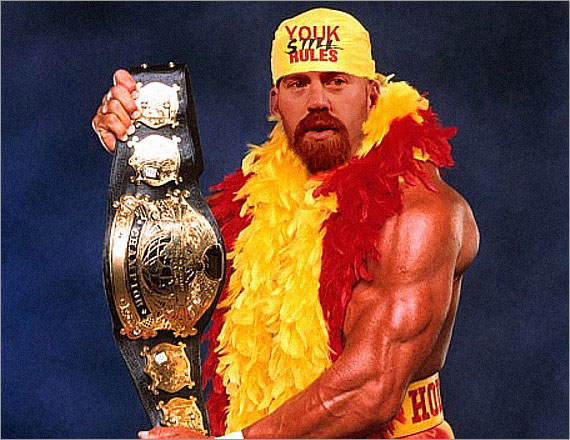
Here is why. Not really, but it is fun to mess with A-Rod electronically. With A-Rod, you know what you get: 100+ runs, 35+ hrs, 100+ RBIs and a .300 average. Something else to keep in mind with A-Rod: there is an odd trend surrounding his homeruns, oddly enough, in odd years. In 2003, he hit 47 HRs; in 2005 the number was 48; and in 2007 he went deep 54 times. Contrast that to his production in even years: in 2004 he hit 36 and in 2006 & 2008, 35. If this trend continues, he is in line to hit more than 45 dingers in 2009. I’m guessing this is just a funky anomaly…but what if it’s not? In addition to A-Rod’s impressive power numbers, he also knows how to run. He hasn’t stolen less than 15 bases since 2002 (and has failed to reach this number only once in a full year during his career). So, A-Rod is amazing. I know it, you know it, Madonna knows it. His contemporary from Queens, however, is much more amazinger (go with me, I’m on a roll).
David Wright is similar to A-Rod in most offensive categories. Wright should get you 100+ runs, 30+ HRs and a batting average around .310. You can also count on his legs for 15+ stolen bases. Wright separates himself from A-Rod in two respects: age and doubles. Wright has averaged more than 41 doubles every full season in the majors. A-Rod, comparatively, has averaged just over 29. The doubles signal that Wright has room to grow in the power numbers, which will only help his counting stats. Quite simply, David Wright should improve while A-Rod has likely plateaued (though a hall of fame worthy plateau). In addition, Wright’s age makes him a less, albeit somewhat negligible, risk of injury and decline. Here, we are talking about four spots at the top of the draft; I think you can take David Wright first and not look back. He will be impressive, he will be healthy and his numbers should improve. You can’t say the exact same things about A-Rod.
Now I feel dirty talking about New York so much. On to the guys the Big Apple spotlight doesn’t shine so brightly on…yet.
After Kevin Youkilis, who is nasty, there is an interesting debate between the six – eight ranked players (Evan Longoria, Chipper Jones and Garrett Atkins). Evan Longoria is my sixth third baseman because of his numbers last year (.272 with 25 home runs in 122 games). If he stays healthy and continues to play to his potential a 30 home run campaign is not out of the question. The only slight concern with Longoria is the potential for a sophomore slump, but I’m still taking him in the 5th round and not looking back.
Meanwhile people tend to dismiss Chipper Jones. In his last five seasons, he has averaged about 123 games played, though he has eclipsed that number in each of the last two seasons. Aside from a bizarre 2004 campaign and his rookie season in 1995, Chipper hasn’t hit lower than .295 in his career. And, by the way, he should hit over 20 home runs, probably in the 25-28 window, drive in runs and score. Sure he might miss some games, but that is where his value comes into play. If you can get him in the 7th round and pair him with a sleeper back-up, you’ll have a first round quality third basemen in their cumulative statistics.
Garrett Atkins getting traded scares the DeJesus out of me. While suiting up for the Rocks full time, he hasn’t hit less than .286. Like Chipper you can count on 20+ homeruns (although it might take Atkins more games to do that in), he’ll score 80+ and drive in 100+.
Still, if I don’t get one of the top guys, I’m going with Longoria and banking on his upside. I’d rather use a fifth rounder on him, than grab someone like Carlos Delgado or Pena and wait to grab a Garrett Atkins. Chipper makes an interesting play, but you have to make sure you have a comparable back-up that can pick up the batting average slack. Because, lets be serious, who thinks Chipper is going to hit .364 again?
This is what I wrote about Troy Glaus before this happened: If none of the afore mentioned intrigue you, might I interest you in a third basemen who hasn’t hit less than 20 home runs in the last four years? Would you be surprised to learn this third baseman hit .270 with 27 HRs and 99 RBIs last year? And that you can get him fairly late in your draft? Ladies and gentleman (ok, just gentleman), I give you Troy Glaus. If you pick runs/stolen bases early in the draft (maybe Jose Reyes, Jimmy Rollins or Grady Sizemore), you could do worse than grabbing Glaus later on. When completely healthy, he has a real chance of hitting 35+ homeruns. Even when slightly healthy he should still get you 25+. He is only 32 and should be an 10th round draft pick – definite value and reliability you can pair with a riskier starting third basemen option. It’s cute right? Well back to reality.
Glaus immediately becomes a late round draft pick – someone you might be happy to store away on the DL in hopes that he comes back and can provide some pop in your lineup later in the year. Obviously this depends on your ability to stash people in DL slots. It almost makes sense to avoid him on draft day because it is more than likely he will eventually find his way to the waiver wire. Still, if you can stash him on the DL until May or so, he has value– it doesn’t hurt to have 15 home runs coming out of nowhere.
A young, potential Glaus clone is Chris Davis. Davis played in only 80 games last year, yet he hit 17 home runs and drove in 55 RBIs. He also batted .285 and scored 51 runs. The only concern is the kind of playing time he will get. If he starts, he could hit 30 homeruns and would find it almost impossible to score less than 80 runs and knock in around 100. Hitting in the Rangers lineup, in the launching pad of Arlington, means Chris Davis could become the preeminent sleeper third baseman. If you miss out on the top eight (or grab one of the riskier eight), make sure you have an idea where Davis might go, and then be sure you pick him a round ahead of that. He has a phenomenal chance to close the production gap.
Complete Third Basemen Ranks (* denotes projected starter):
David Wright*
Alex Rodriguez* (oh so pretty)
Miguel Cabrera* (positional flexibility)
Aramis Ramirez*
Kevin Youkilis*
Evan Longoria* (sophomore slump?)
Chipper Jones* (injury always a worry)
Garrett Atkins* (trade a concern)
Adrian Beltre* (Batting average should increase, which should help counting stats)
Jorge Cantu* (the numbers don’t lie…do they?)
Mark Reynolds* (so many strike outs)
Mark DeRosa* (positional flexibility, switch to AL)
Aubrey Huff* (great numbers last year)
Melvin Mora* (was RBI total a little fluky?)
Chone Figgins* (steals big source of value, better as a second bagger)
Chris Davis* (I like him)
Casey Blake* (good beard growing capabilities)
Kevin Kouzmanoff*
Edwin Encarnacion*
Alex Gordon* (at some point he might live up to the hype)
Mike Lowell* (age a concern)
Ryan Zimmerman* (bounced back to hit well last year…poor line-up, poor team)
Troy Glaus (injury zaps big bops)
Akinori Iwamura*
Ty Wigginton
Marco Scutaro
Mark Teehan
Freddy Sanchez* (never a huge fan of players that only get you batting average)
Felipe Lopez
Scott Rolen
Jeff Baker
Joe Crede
Pedro Feliz (he likes to hit homeruns…he likes to strike out)
Blake DeWitt
Ian Stewart
Rich Aurilia
Macier Izturis
Hank Blalock
Nick Punto
Aaron Miles
Ramon Vazquez
Greg Dobbs
Jeff Keppinger
Chase Headley (maybe low, but that line-up and ballpark don’t play nice for sophomore campaigns)
Omar Infante
Showing posts with label H2h. Show all posts
Showing posts with label H2h. Show all posts
Thursday, January 22, 2009


Wednesday, January 7, 2009
H2H Shortstop Rankings
h2h Corner
Shortstop Rankings
I love Cal Ripken (platonically, of course, unless he said something…). He was a steady, predictable, trusted shortstop (and later third baseman). Though his numbers might never have been completely dominating (with the exception of his MVP year of 1991), his fantasy owners were always happy to have him.
Over were the days of great defense being king – or even valued (witness how difficult it is to ascertain Adam Everett’s true value). This new age has ushered in a new bread of fantasy superstars: the well-diversified offensive shortstop (be it via the stolen base, high batting average, runs scores, or, yes, homes runs/RBIs). Having this type of SS on your squad has become essential to the success of a fantasy squad.
The top three fantasy shortstops are pretty easy to predict (barring significant injury): Hanley Ramirez (#3 overall), Jose Reyes (4) and Jimmy Rollins (16). Given their numbers, you can make a case for taking either Hanley Ramirez or Jose Reyes with the top pick overall. Personally, I like Hanley Ramirez a bit more (and this really is splitting hairs) because his HR production has steadily improved from 17 to 29 to 33, while his batting average has stayed consistently around .300. My only concern is if his stolen base production continues to decline. In his first two full seasons, Ramirez swiped 51 bags, while last year he stole only 35. So long as he maintains that production, he will be the best fantasy shortstop for a long time (provided the Marlins hold off moving him to CF).
Jose Reyes doesn’t provide the pop that Hanley does, but he more than makes up for it with his legs and knowing how to use them. He has averaged 113 runs in each full season with at least 56 stolen bases each year. His batting average is a bit more suspect than Hanley’s, though it has hovered between .280 - .300 for the last three seasons. I don’t really like the Mets, but I love Jose Reyes. If they have any interest in Cesar Izturis, I’m sure the Orioles would be happy to make a deal (provided Izturis isn’t an Angelos favorite yet).
Outside the big 3, if you’re looking for a dependable player with decent upside, might I suggest Jhonny Peralta (66)? For someone I thought would have a comparable 2008 season to Khalil Greene, he put up very un-Greene-like numbers. Aside from 2006 (.257 and 13 HRs), Peralta hasn’t hit lower than .270 or less than 21 HRs in a full season. He should also get you 70+ RBIs (potentially more depending on where he hits in what could be a productive lineup) and 85+ runs (his career low is 82). Over the last four years, Peralta has quietly become a fairly consistent SS (and he could add 3b eligibility and flexibility to your line-up this year). While he might not possess the upside of a Rafael Furcal (75), he is nonetheless a good – and likely under the radar – option.
Speaking of upside, if you’re looking for a later-round shortstop with the potential for solid returns, think long and hard about Rafael Furcal (75) and Stephen Drew (93), particularly if they fall where they should (the seventh and ninth rounds, respectively). Both could experience better seasons this year than last. Furcal has the well-earned health specter hanging over his head: he has failed to play 140 games in four of his nine complete seasons. However, when he plays, he puts up delicious numbers. A healthy Furcal is good for 100-130 runs, 10-15 HRs, and 25+ SBs. He hasn’t posted an average worse than .275 and should be right around.280.
As for Stephen Drew, he posted a remarkable sophomore campaign. His batting average jumped from .238 to .291 (his 2008 numbers were actually more in line with his 209 at bats in 2006). He also scored 91 runs and hit 21 HRs. If he continues improving his batting average and adds a little pop – he might hit 27-30 HRs and be a good source of RBIs – he would be an excellent mid-round selection.
I wonder if I am a little low on Troy Tulowitzki (108). Because of the upside he presents, he could be a lot like Stephen Drew. I am ultimately dissuaded, however, because I like the consistency (and stolen bases) from Orlando Cabrera (102) (ya know, if someone wants to give up the picks and sign him already) and J.J. Hardy (96) a bit more. It wouldn’t be a reach, though, to consider Tulo over the three players ranked in front of him.
Last year’s top 13:
- Jose Reyes (last year’s overall ranking: 2) Finished: 2nd among shortstops
- Hanley Ramirez (3) Finished: 1st among shortstops
- Jimmy Rollins (4) Finished: 4th among shortstops
- Orlando Cabrera (42) Finished: 9th among shortstops
- Carlos Guillen (44) Finished: 15th among shortstops
- Troy Tulowitzki (58) Finished: 33rd among shortstops
- Derek Jeter (65) Finished 7th among shortstops
- J.J. Hardy (73) Finished: 8th among shortstops
- Edgar Renteria (79) Finished: 18th among shortstops
- Khalil Greene (82) Finished: 56th among shortstops
- Jhonny Peralta (85) Finished: 3rd among shortstops
- Michael Young (88) Finished: 5th among shortstops
- Miguel Tejada (91) Finished: 11th among shortstops
In retrospect, I was way too low on Michael Young and way too high on Orlando Cabrera and Carlos Guillen. Looks like I pegged Derek Jeter and J.J. Hardy right on though. Tulowitzki, I’m taking a mulligan (on account of his injury). Still, I never advocated taking him in the fourth round, which is where a lot of people drafted him.
If Jhonny Peralta continues his upward trajectory, failing to land one of the big three would necessitate getting Jhonny in the 6th/7th round. This could be a draft-changing/saving move. He could be undervalued in drafts and might provide a good SS at the right price if you are frozen out of the alpha dogs.
If you have a top pick, you could do worse than taking Pujols or Grady Sizemore. When the draft comes back around, however, make sure you can get Jimmy Rollins. It is hard to nitpick Jimmy’s value next year – he had injury problems and still made it back to a top 5 year. He is easily a second rounder in my book, but hopefully, you can get him toward the end of the round. This, surprisingly, makes Jimmy Rollins (with a tip of the hat to Jhonny Peralta) perhaps the best SS bargain.
Complete Shortstop Ranks (* denotes projected starter):
- Hanley Ramirez*
- Jose Reyes*
- Jimmy Rollins*
- Jhonny Peralta*
- Michael Young*
- Rafael Furcal* (health is a question here)
- Derek Jeter*
- Stephen Drew* (Could improve in the desert)
- J.J. Hardy*
- Orlando Cabrera (where will he end up?)
- Troy Tulowitzki* (Wasn’t a big fan last year, but I didn’t predict injury-plagued campaign)
- Miguel Tejada*
- Christian Guzman
- Ryan Theriot
- Mike Aviles
- Marco Scutaro
- Carlos Guillen*
- Yunel Escobar* (lots of swirling trade rumors)
- Edgar Renteria* (yuck…
- Jed Lowrie
- Bobby Crosby
- Yuniesky Betancourt*
- Clint Barmes
- Jose Bautista
- Jason Bartlett (
- Brendan Harris
- Cesar Izturis* (Way to go Orioles)
- Jamey Carroll
- Erick Aybar
- Rich Aurilla
- Macier Izturis
- Nick Punto (Metrodomers love him)
Thursday, October 23, 2008
H2H Catcher Rankings
Catcher Rankings
“Variable, this is Knife! Over! Variable, this is Knife! Over! Variable, this is Knife! Where the heck are you!?!?”
Mike Napoli at 13 seems about right to me. In some (smaller) leagues I might take a chance on him over proven vets like AJ Pierzynski or Ramon Hernandez. He did hit .273 last year with 20 HRs and 7 stolen bases. He could conceivably be a 25 HR 10 SB guy. That combination of stats in a catcher is intriguing.
“Circular error probable zero. Impact with high-order detonation. Have a nice day.”
Complete Ranks:
- Brian McCann (overall ranking: 61)
- Russell Martin (69)
- Joe Mauer (76)
- Geo Soto (87)
- Ryan Doumit (125) – can he stay healthy?
- Jorge Posada (128) – ditto
- Bengie Molina (132)
- Victor Martinez (148) – where has the power gone?
- Kelly Shoppach (153) – will he get at-bats?
- AJ Pierzynski (164)
- Chris Iannetta (169)
- Ramon Hernandez (176) – watch our for Matt Wieters
- Mike Napoli (178) – will he claim that stat potential?
- Chris Snyder (185)
- Dioner Navarro (209)
- Kurt Suzuki (210)
- Yadier Molina (212)
- Gerald Laird (218)
- Ivan Rodriguez (223)
- Rod Barajas (225)
- John Buck (236)
- Miguel Olivo (241)
- Jason Veritek (249) – his landing spot could answer a lot of question marks.
- Pablo Sandoval
- Jeff Clement
Last year’s top 10*:
- Russell Martin (last year’s overall ranking: 29) Finished: 3rd among catchers
- Victor Martinez (60) Finished: 27th among catchers
- Jorge Posada (76) Finished: 39th among catchers
- Brian McCann (102) Finished: 2nd among catchers
- Joe Maurer (103) Finished: 1st among catchers
- Geovany Soto (109) Finished 5th among catchers
- Kenji Johjima (110) Finished: 34th among catchers
- Bengie Molina (160) Finished: 6th among catchers
- A.J. Pierzynski (175) Finished: 8th among catchers
- Ryan Doumit (178) Finished: 4th among catchers
- Mike Napoli (195) Finished: 10th among catchers
- Ramon Hernandez (205) Finished: 11th among catchers
*I only ranked 12 catchers last year for two reasons. One: I didn’t play in a league – beside my 18-team SABR auction competition, which was an entirely different ranking experience – that had more than 10 teams. Two: typically people don’t double up on catchers. Frankly, after the top five, it gets a little muddy anyway. The injuries to V-Mart and Posada hurt my initial rankings and Johjima being horrible didn’t help, but otherwise, it appears my rankings ended up suitable for a standard 5x5 h2h league.
By: Albert Lang
Monday, September 22, 2008
How to Win a Standard 5x5 H2H League
How do you win a standard* daily 5x5 h2h league?
It’s as easy as pick six lotto (or pick five if you have the tie-breaker).
Fantasy finals (especially in non-keeper leagues) are all about the last two weeks of the season. It’s entirely “what have you done for me lately.” Carlos Quentin: not so much, kick him off the roster. Ryan Howard: you’re happy you weathered the storm. Jayson Werth, you’re happy he’s done his best non-SF Aaron Rowand impersonation.
This means players like Werth, Shin-Soo Choo, Christian Guzman (yes even that Guzman), Kelly Shopach and maybe even Elijah Dukes need to find a way into your position player rotation.
You need to be streaming your roster spots to ensure you have a full hitting roster every day. Don’t worry about jettisoning an average player for fear your opponent will grab him. Any reasonable waiver period will make the gain negligible given what you made up by not having an empty roster spot. This does not mean I’m advocating dropping top 50 players…but outside of that, yeah sure.
This should signal that players now have different values given different circumstances. A valuable player in one league could very well be the love child of Jose Mesa/Armando Benitez in another.
If your competition is full of mashers and you haven’t beaten them all year in HRs, don’t worry about home runs. You need to find the categories you can win and go after those.
After two days, it is pretty clear what will and will not be competitive. You’re out in HRs and RBIs? Make sure you win Runs and SBs. This means it makes sense to drop the Carlos Penas of the world for a Willie (be it Harris or Tavaris) or Erick Patterson or Lastings Milledge or Coco Crisp.
Carlos Pena, in this instance, has no value to you or your opponent. If your opponent grabs the discarded Pena, he’ll only increase his lead in categories he’ll win anyway.
While streaming position players can help you on those Mondays and Thursdays, the real streaming power comes with starting pitching. Pitching categories are the easiest to manipulate on a week by week basis (because no one knows what they’ll get from virtually any hurler – viva Ted Lilly).
It’s important to know your opponent’s roster. High K pitchers on good win teams could make winning Wins and K’s difficult. So focus on vulturing saves (Hanrahan, the Orioles carousel, etc.), but make sure every pitcher you plug in maximizes ERA and WHIP.
Quite simply, it’s not about performing the best in every category and having the best all around team. It’s about performing the best in six categories.
There is a special caveat to the streaming – make sure you can get up early and make sure your league doesn’t have innings or moves caps.
If you can’t get up at 7:00 am, you might miss out on the best streamable pitchers. This means you’ll have to start streaming two days ahead or give up altogether.
If there is an IP limit, plan out how many innings you have left and what you can reasonably expect from your staff and move forward accordingly. Don’t leave starts or IPs out there, you’ll regret it.
If you’re up against a moves limit, you’ll have to maximize every move.
People may hate streamers not associated with a tickertape parade, but the strategy paves the way to fantasy gold. Look at the wire (in 10-12 team leagues), you’ll find:
Kevin Millwood (vs. OAK [1.35 ERA 0.90 WHIP])
Jamie Moyer (vs. FLA [3.12 ERA, 0.92 WHIP])
John Lannan (vs. SD [3.00 ERA, 1.33 WHIP])
Ryan Rowland-Smith (vs. LAA [4.05 ERA, 0.90 WHIP]).
I think you get the point.
Happy streaming and winning. Have a scenario, start/sit, or fantasy ethics question, e-mail me at albert_l_Langiii@yahoo.com
*standard = R, HR, RBI, SB, AVE, W, S, K, ERA, WHIP
Subscribe to:
Posts (Atom)